Tag: travelers over 50

  • Small vs Large Cruise Ships After 50: Which Feels Better?

    Small vs Large Cruise Ships After 50: Which Feels Better?

    Travel changes after 50. Not in a limiting way, but in a clarifying one. You know what drains you. You know what restores you. You know the difference between a trip that looks good on paper and one that feels good in your body. Nowhere does that distinction show up more clearly than at sea.

    Cruise lines frame the choice as “intimate vs. exciting,” but the truth is more textured. The question isn’t which ship is better. It’s the ship that matches the version of you traveling now, the one who values comfort, ease, and meaningful experience over spectacle for its own sake.

    What follows is an honest look at how small and large ships actually feel for travelers in midlife and beyond. Not marketing gloss. Just lived reality.

    The Small-Ship Experience After 50: Ease, Intimacy, and Depth

    A Pace That Meets You Where You Are

    On a small ship, nothing feels far away. You’re not walking half a mile to breakfast or weaving through crowds for a cup of coffee. Movement is effortless, a gift when you’d rather conserve energy for the places you’re visiting. Your muscles stay relaxed, your breath steady, and there’s a lightness in your step that matches the gentle sway of the ship.

    Embarkation and disembarkation feel civilized. You’re not herded. You’re not rushed. You’re welcome.

    A Sense of Being Known

    Small ships foster a soft kind of community. Crew members remember your name and your morning drink. Fellow passengers become familiar faces. You don’t have to be social, but you’re not anonymous either. For many travelers over 50, this creates a quiet sense of belonging. Being recognized and appreciated adds a layer of comfort, making the experience feel personal rather than transactional.

    Destinations That Feel Close Enough to Touch

    Small ships slip into smaller ports, the kind where you step off the gangway, and you’re in the town, not in a megaship parking lot. You hear the clatter of espresso cups, the laughter of fishermen, the rhythm of local life. It’s immersive in a way big ships can’t replicate.
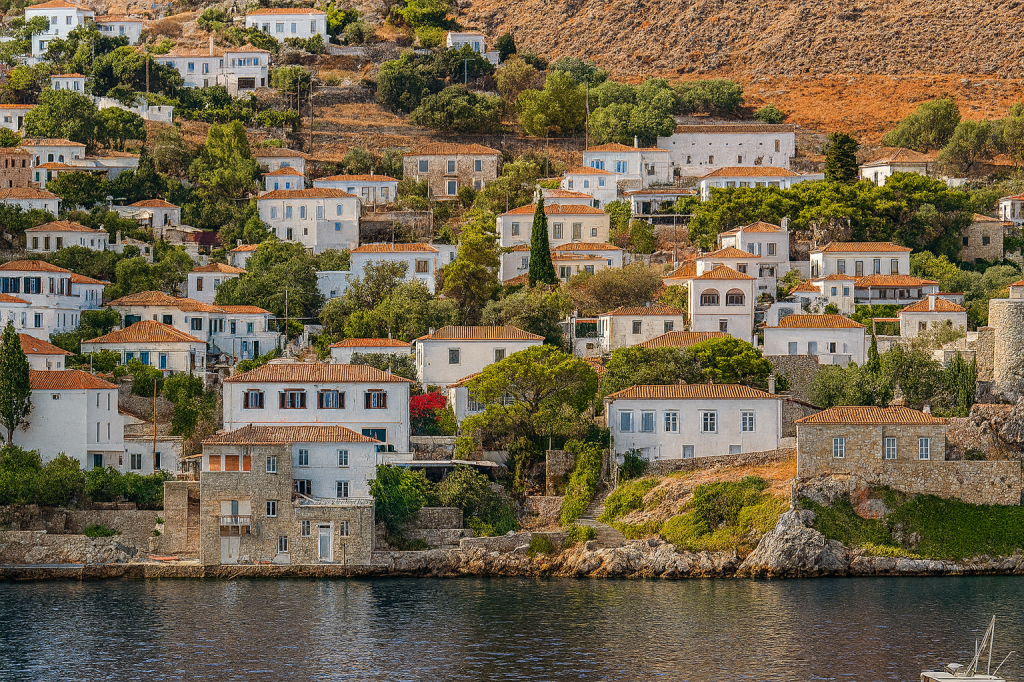
    Traditional Greek coastal village with white stone houses and terracotta roofs by the sea
    Smaller ships often dock closer to towns like this, where local life begins just steps from the gangway.

    A Calmer Sensory Environment

    The atmosphere is more boutique hotel than floating resort. Quiet isn’t something you search for; it’s built into the experience. Picture yourself on deck at 10 p.m., the only sound the gentle hiss of waves against the hull.

    For travelers who crave depth, presence, and a gentler pace, this is where small ships shine.

    The Big-Ship Experience After 50: Abundance, Entertainment, and Stability
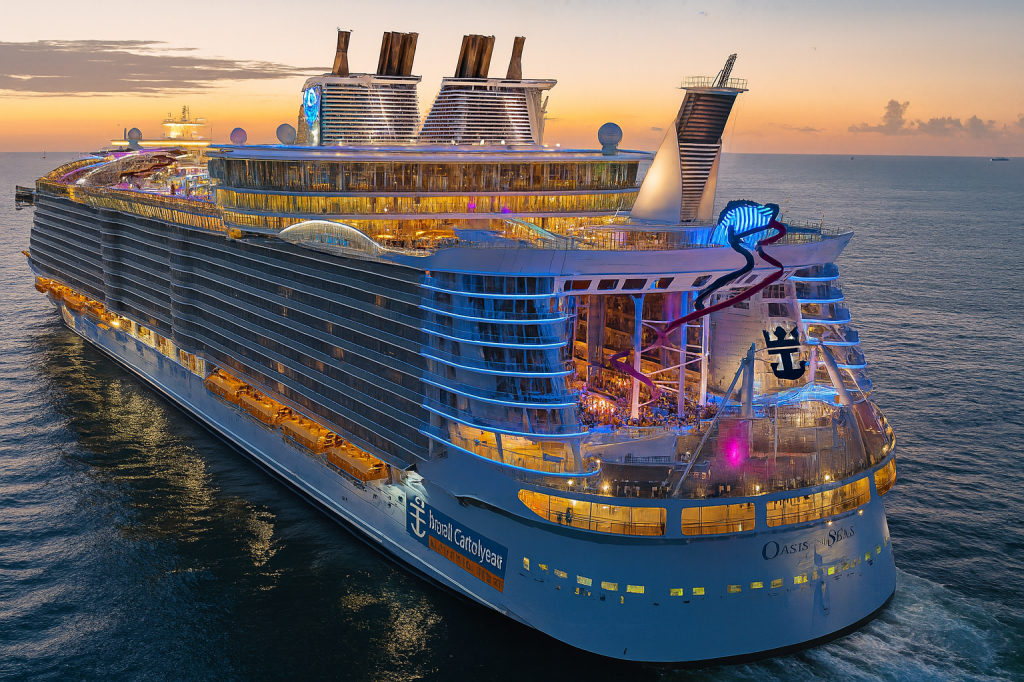
    Large modern cruise ship sailing at sunset with illuminated upper decks
    Large ships deliver scale, spectacle, and a resort-style atmosphere at sea.

    A Floating Resort With Endless Options

    Big ships are built for choice. Multiple restaurants, each with its own aromas and energy. Broadway-style shows. Spas, gyms, lounges, libraries. Quiet corners if you know where to look. You could fill your days without ever touching land.

    For some travelers, this feels like freedom that’s a buffet of possibilities.

    More Stability in Rough Seas

    Size matters when the ocean gets moody. Big ships often feel steadier, offering reassurance to anyone sensitive to motion. You can sit at dinner with a glass of water that barely ripples, even when the waves are flexing their muscles.

    Entertainment Without Effort

    Aerial acrobats performing over a pool on a large cruise ship entertainment deck
    From acrobatic water shows to live performances, big ships offer built-in evening entertainment.

    You don’t have to plan. You don’t have to research. You can simply wander and discover: trivia here, live music there, a comedy show after dinner. Follow the sound of laughter or the scent of fresh pastries and see where it leads.

    A Broader Mix of Ages

    Big ships attract families, groups, and multigenerational travelers. This can feel lively and joyful or chaotic, depending on your mood and cabin location. If you crave quiet, early mornings on deck or tucked-away lounges become your sanctuary.

    What Actually Feels Better After 50
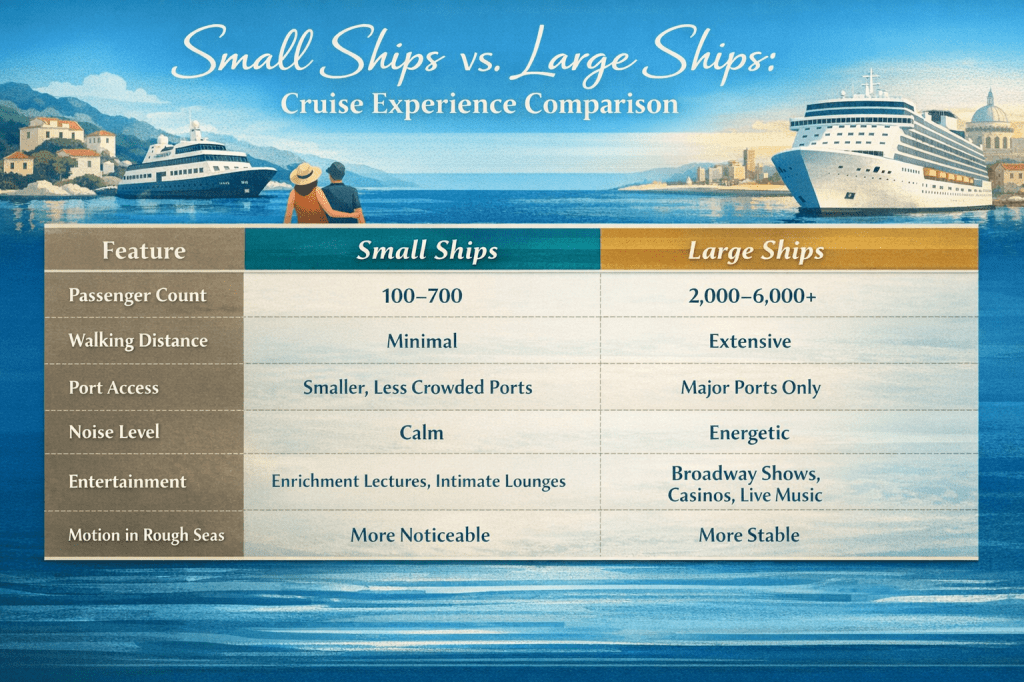
     small ship vs large ship

    Here’s the truth most cruise marketing avoids: the best ship is the one that matches your energy.

    Which of these feelings lights you up?

    Choose a small ship if you want:

    • A slower, more intentional pace
    • Easy movement around the vessel
    • A quieter sensory environment
    • More immersive ports
    • A boutique-hotel-at-sea feeling

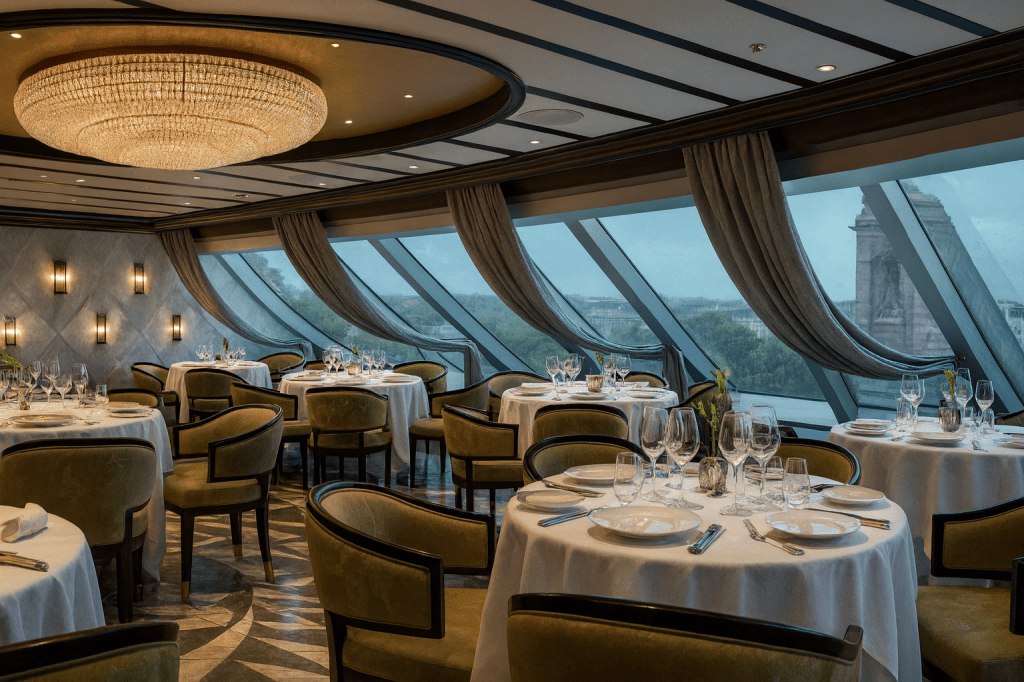
    Elegant small cruise ship dining room with round tables and panoramic windows
    On smaller ships, dining feels intimate and unhurried — more boutique hotel than floating resort.

    Choose a big ship if you want:

    • Variety and stimulation
    • Evening entertainment
    • More dining choices
    • Stronger motion stability
    • A resort-style experience

    This isn’t about age. It’s about alignment, what feels nourishing, what feels manageable, what feels like the right container for the kind of travel you want to do now.
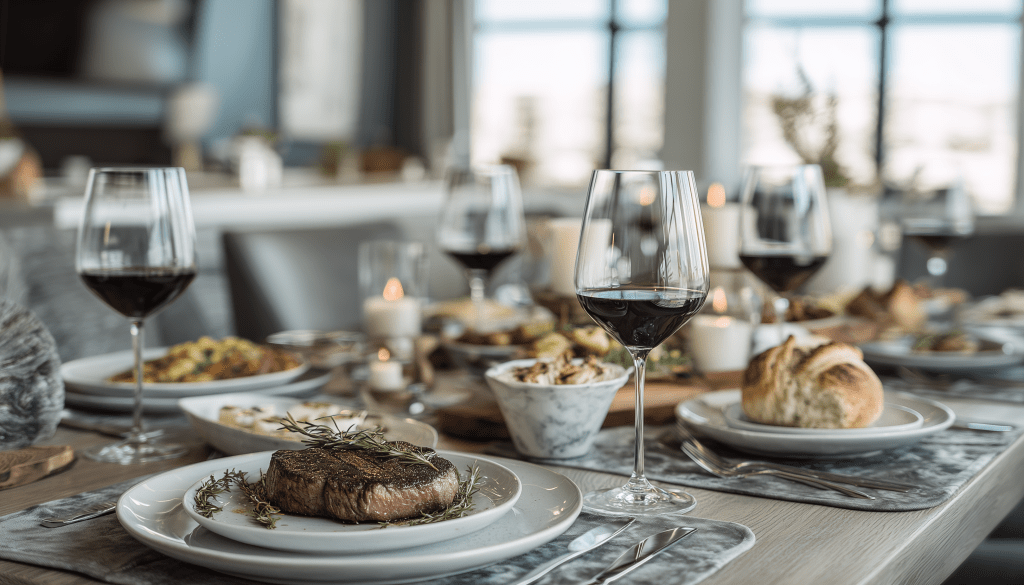
    Steak dinner with red wine served in cruise ship specialty restaurant
    Multiple specialty restaurants are part of the appeal on larger vessels.

    What About Price?

    • Small ships are typically more expensive per night but often include excursions, drinks, and gratuities.
    • Large ships may have lower base fares, but add-ons can increase the final cost.
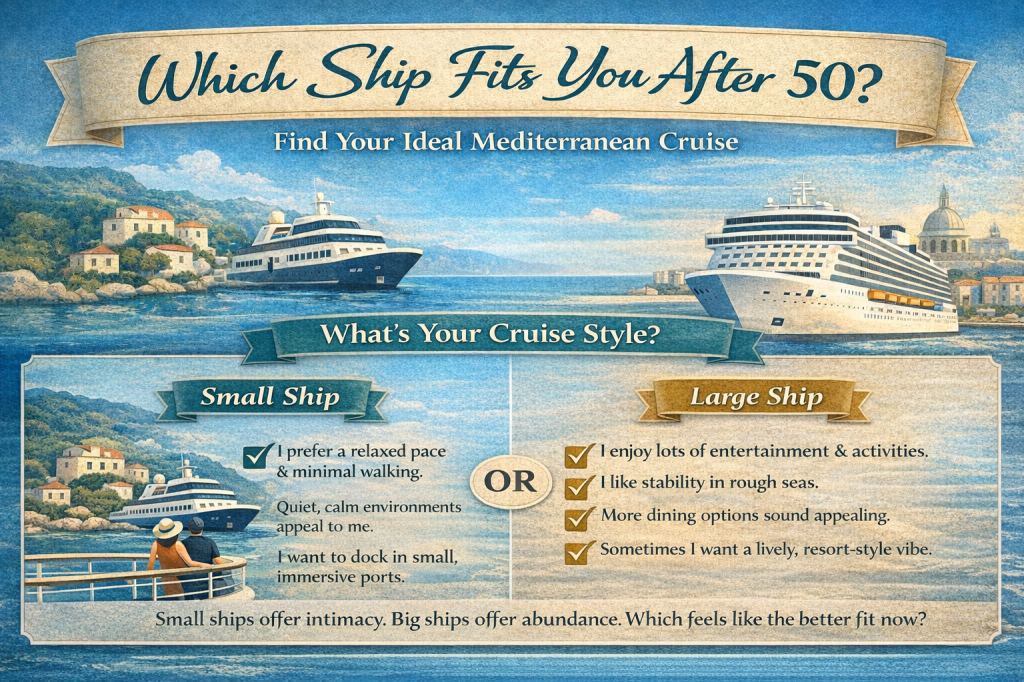
    cruise style - small ship vs large ship

    If this is a once-every-few-years trip, the choice matters. The wrong atmosphere can leave you overstimulated or underwhelmed. The right ship feels effortless from the first afternoon onboard.

    Choosing the Right Cruise Ship After 50
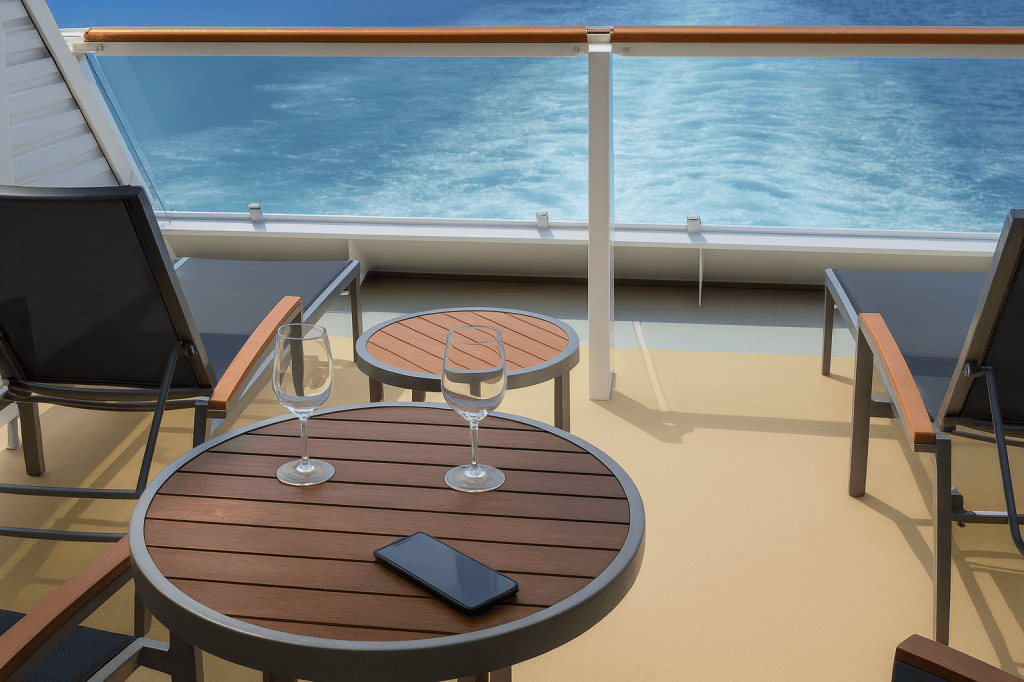
    Cruise ship balcony with two chairs overlooking the ocean wake
    The best cruise choice is the one that matches your pace and your priorities.

    After 50, travel isn’t about packing in as many sights as possible. It’s about choosing experiences that resonate and enrich your life. Small ships offer intimacy. Big ships offer abundance. Both can be extraordinary, but only one will feel like the right fit for the version of you stepping onto the gangway today.

    So, which horizon calls your name right now?  

    After 50, the goal isn’t to cruise bigger or smaller. It’s to cruise wiser.
  • Balcony vs. Inside Cabin: How to Choose the Right Cruise Cabin After 50

    Balcony vs. Inside Cabin: How to Choose the Right Cruise Cabin After 50

    After 50, cruising becomes less about squeezing in everything. It focuses more on comfort. Ease and small details make travel enjoyable. Choosing the right cabin plays a bigger role than many travelers expect. Here’s how to decide between a balcony and an inside cabin. Consider what matters most: sleep, mobility, budget, health, and how you plan to spend your time onboard.

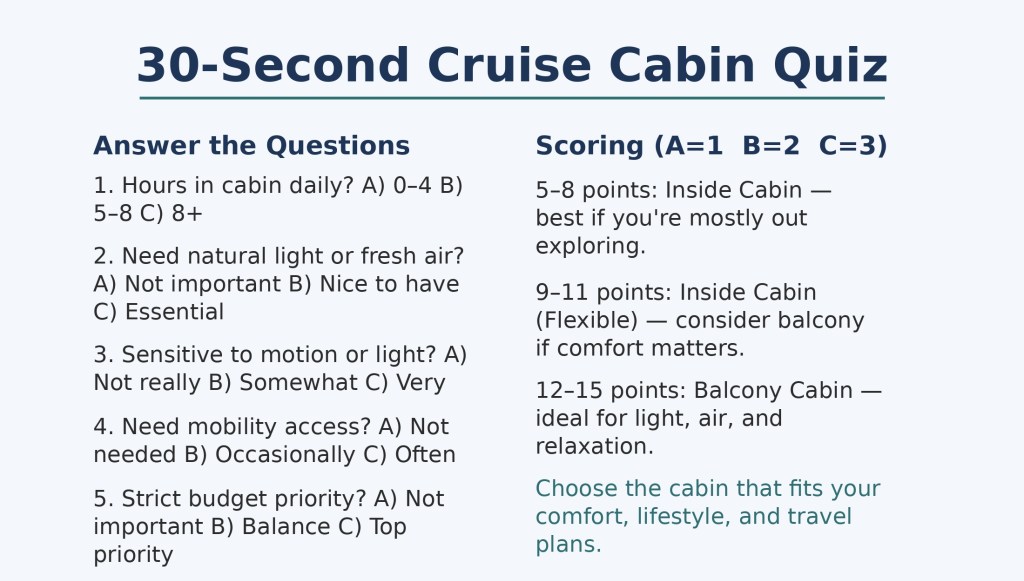
    Quick self-quiz: What’s your ideal cruise cabin?

    Check to see which cabin fits your travel style:

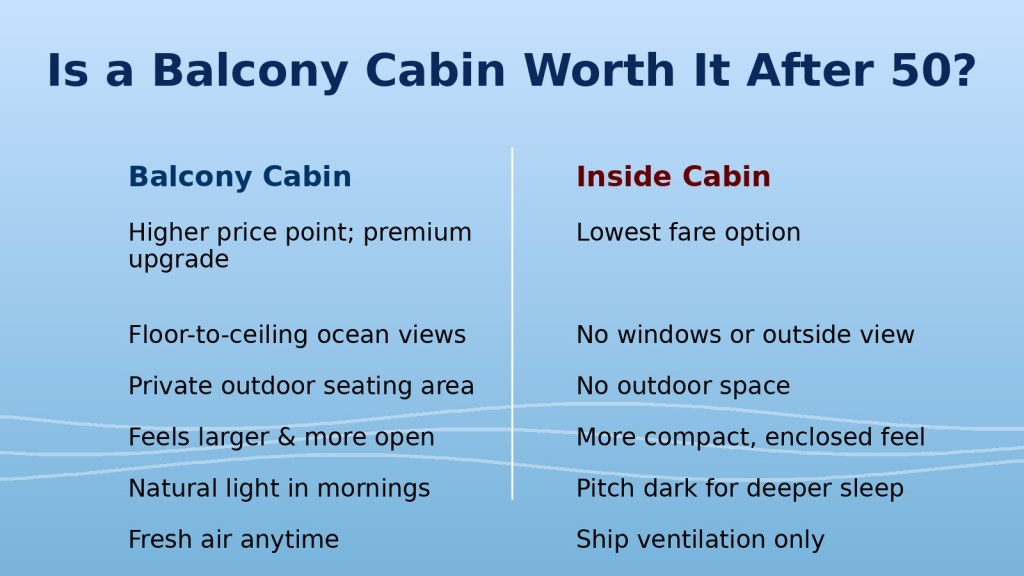
    Side-by-side comparison

    When a balcony is worth the extra cost

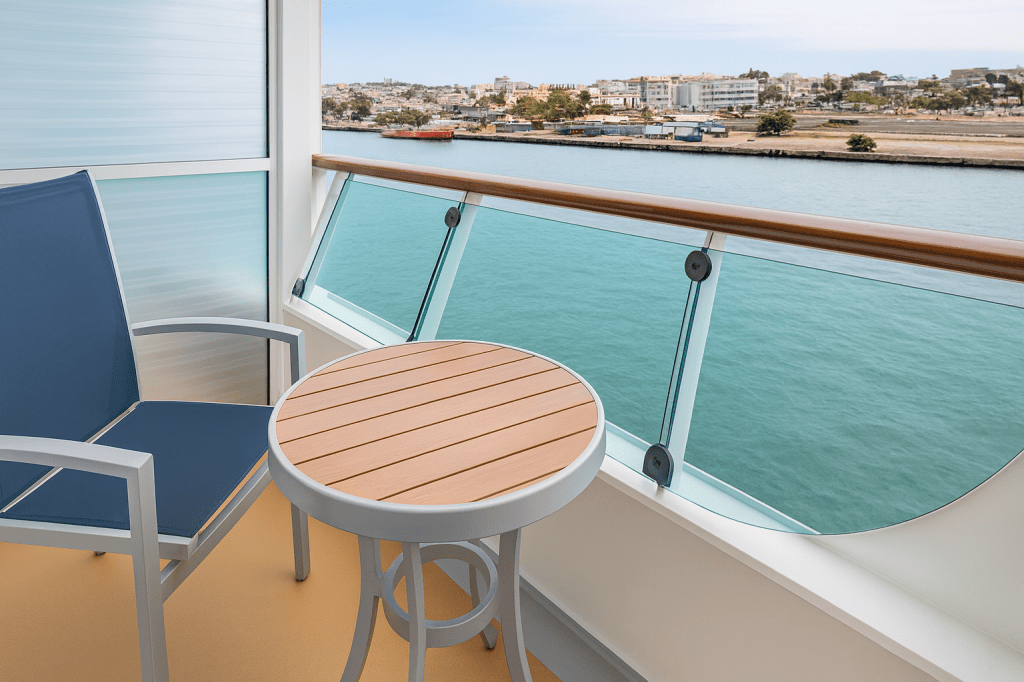
    A balcony can add a layer of comfort and independence to your cruise. Imagine waking to the sound of waves and stepping outside for a breath of fresh air before breakfast. That small bit of private outdoor space can noticeably change how the cruise feels day to day.

    Pick a balcony if you want natural light and a private spot to enjoy your morning coffee. On most mainstream cruise lines, interior and balcony cabins in the same category often differ. The difference is only 20–40 square feet inside. The primary difference is the outdoor space.

    Practical reasons to pick a balcony

    • You enjoy calm mornings with a view.
    • You want a private place to sit without navigating crowded decks.
    • You’re taking a more extended cruise and expect to spend more time in your cabin.
    • You’re willing to reallocate budget from extras to cabin comfort. Price differences can be substantial, sometimes twice the cost of the cheapest inside fare.
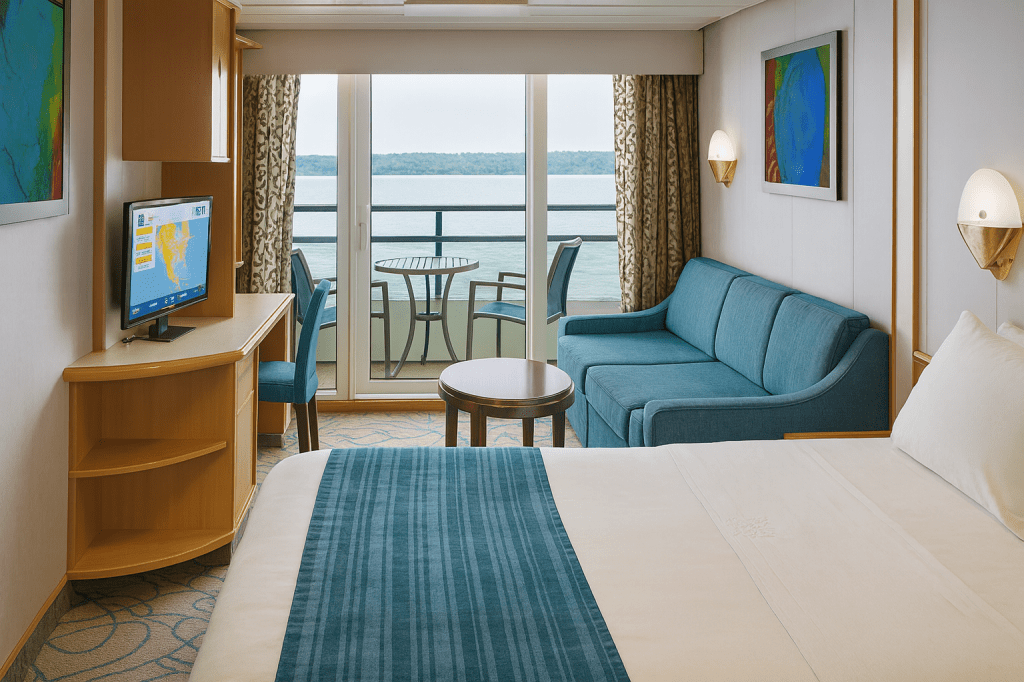
    Balcony cruise cabin interior with sofa, desk, and sliding glass doors leading to a private balcony with ocean view.
    Natural light and easy balcony access can change how a cruise feels day to day.

    When an inside cabin is the smarter choice

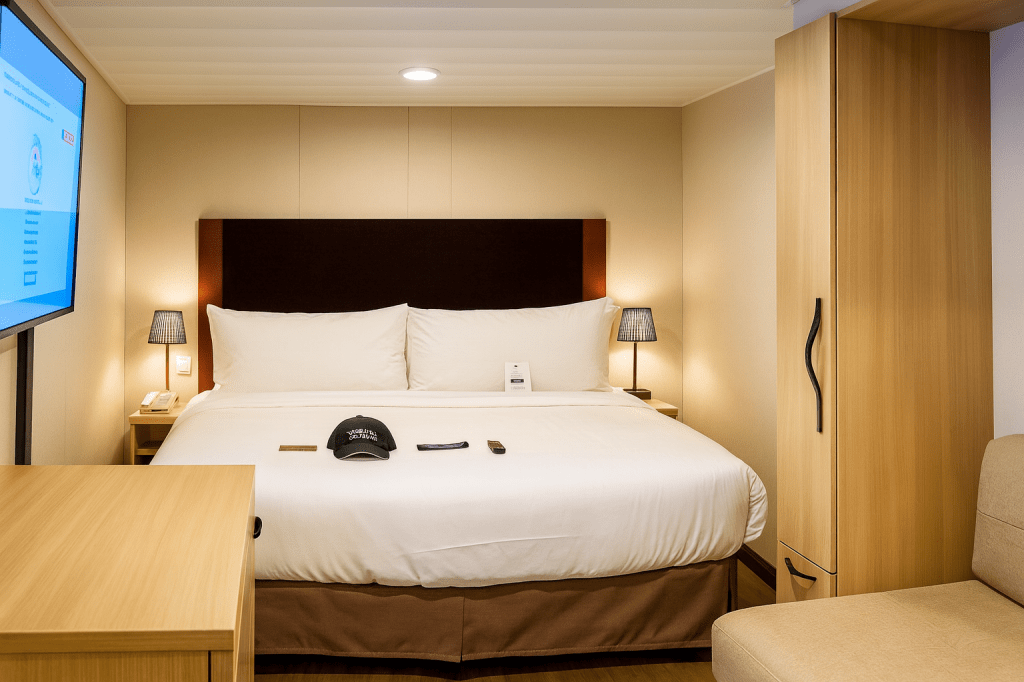
    Choose an inside cabin if you want to save money. It is also a good choice if you prefer to sleep in total darkness. Consider it if you won’t be in your room much. These cost-effective options let you redirect your savings toward experiences off the ship. The savings can often cover multiple shore excursions, specialty dining, or a pre- or post-cruise hotel stay. If you’ll be out most of the time, you probably won’t miss the balcony.

    Practical reasons to pick an inside cabin

    • You sleep best in total darkness.
    • You want the lowest possible fare.
    • You expect to spend little time in the cabin.
    • You’re booking a short cruise or a port-heavy itinerary.
    With no windows and total darkness, inside cabins can offer some of the best sleep at sea.

    Accessibility, Mobility, and Health Considerations

    • Mobility aids: Balcony thresholds and outdoor furniture can reduce maneuvering space. Typical balcony door widths are around 24 inches (61 cm), but this varies by ship. Always confirm door width and layout before booking.
    • Balance and seasickness: Some travelers feel better seeing the horizon. Others prefer a dark interior space to reduce perceived motion. Your past experience matters more than theory.
    • Noise and light: Balconies near public decks or lifeboats can be noisy. Interiors near elevators or machinery also experience noise. Review deck plans and recent passenger reviews.

    Balcony cabins offer access to fresh sea air, according to Cruise Nonstop. This can be especially helpful for passengers who prefer natural ventilation. Inside cabins rely on the ship’s HVAC system. This can be a meaningful advantage if you have respiratory sensitivities.

    Money talk: Is the balcony worth it?

    Compare total trip cost, not just the fare. Port fees, gratuities, and onboard spending do not change with cabin type. Hence, a higher cabin fare reduces your discretionary budget.

    On many sailings, upgrading from an inside to a balcony can add $40–$100 per person, per day. The cost varies depending on itinerary and demand. Use that difference to calculate what experiences you’d give up to upgrade.

    • Look for deals and timing: Balcony prices fluctuate with demand and itinerary. Off-peak sailings and last-minute upgrades at embarkation can narrow the gap.
    • Try a mental exercise to help decide: Ask yourself. What two extras are you willing to skip for the luxury of a balcony? This can be a helpful way to rank what truly matters in your cruise experience and avoid any regrets later.
    On scenic itineraries, a balcony can make sail-ins and sail-aways feel more personal.

    How to book smart: questions to ask the cruise line or travel agent.

    • Exact cabin square footage and deck plan location.
    • Is the balcony obstructed or facing lifeboats/public areas?
    • Are there accessible cabins with balconies, and what are the door widths?
    • What recent cabin reviews say about noise and light?
    • Is there a chance of an upgrade at embarkation, and what are the typical costs?

    Before booking, review deck plans, confirm square footage, read recent cabin reviews, and verify accessibility details. If your itinerary includes scenic cruising days, factor that into your decision.

    Bottom line

    There’s no universally “better” cabin. Only the one that fits how you travel now.

    Choose a balcony if outdoor space and fresh air enhance your experience. Choose inside if maximizing value and sleep quality are more important.

    The right decision supports your comfort, budget, and travel pace. It is not what anyone else says is best.