Tag: travel

  • Small vs Large Cruise Ships After 50: Which Feels Better?

    Small vs Large Cruise Ships After 50: Which Feels Better?

    Travel changes after 50. Not in a limiting way, but in a clarifying one. You know what drains you. You know what restores you. You know the difference between a trip that looks good on paper and one that feels good in your body. Nowhere does that distinction show up more clearly than at sea.

    Cruise lines frame the choice as “intimate vs. exciting,” but the truth is more textured. The question isn’t which ship is better. It’s the ship that matches the version of you traveling now, the one who values comfort, ease, and meaningful experience over spectacle for its own sake.

    What follows is an honest look at how small and large ships actually feel for travelers in midlife and beyond. Not marketing gloss. Just lived reality.

    The Small-Ship Experience After 50: Ease, Intimacy, and Depth

    A Pace That Meets You Where You Are

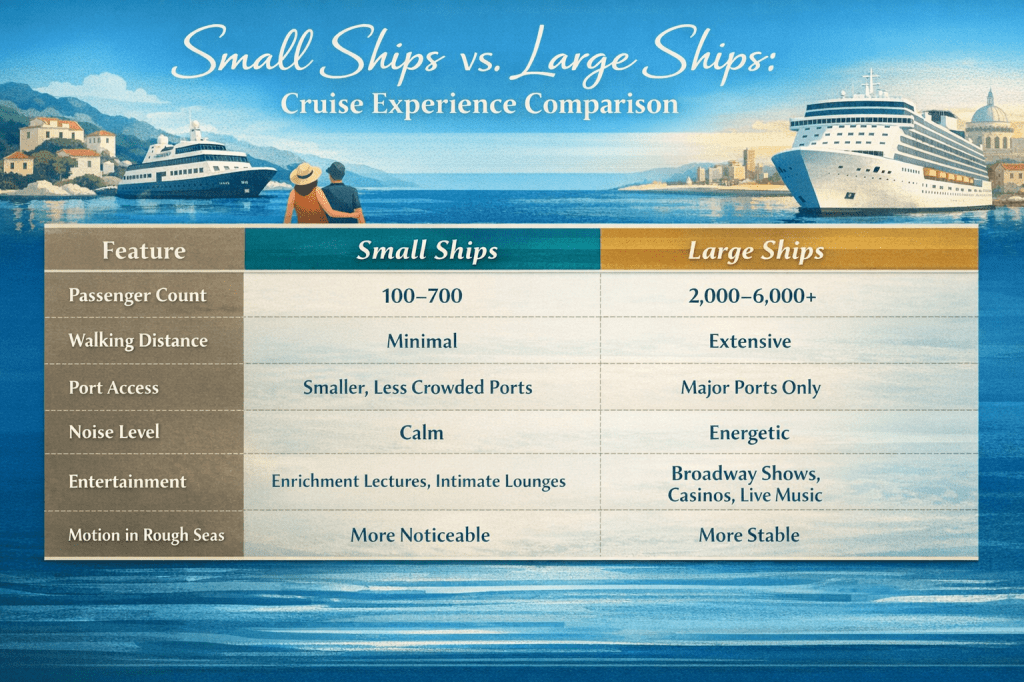
    On a small ship, nothing feels far away. You’re not walking half a mile to breakfast or weaving through crowds for a cup of coffee. Movement is effortless, a gift when you’d rather conserve energy for the places you’re visiting. Your muscles stay relaxed, your breath steady, and there’s a lightness in your step that matches the gentle sway of the ship.

    Embarkation and disembarkation feel civilized. You’re not herded. You’re not rushed. You’re welcome.

    A Sense of Being Known

    Small ships foster a soft kind of community. Crew members remember your name and your morning drink. Fellow passengers become familiar faces. You don’t have to be social, but you’re not anonymous either. For many travelers over 50, this creates a quiet sense of belonging. Being recognized and appreciated adds a layer of comfort, making the experience feel personal rather than transactional.

    Destinations That Feel Close Enough to Touch

    Small ships slip into smaller ports, the kind where you step off the gangway, and you’re in the town, not in a megaship parking lot. You hear the clatter of espresso cups, the laughter of fishermen, the rhythm of local life. It’s immersive in a way big ships can’t replicate.

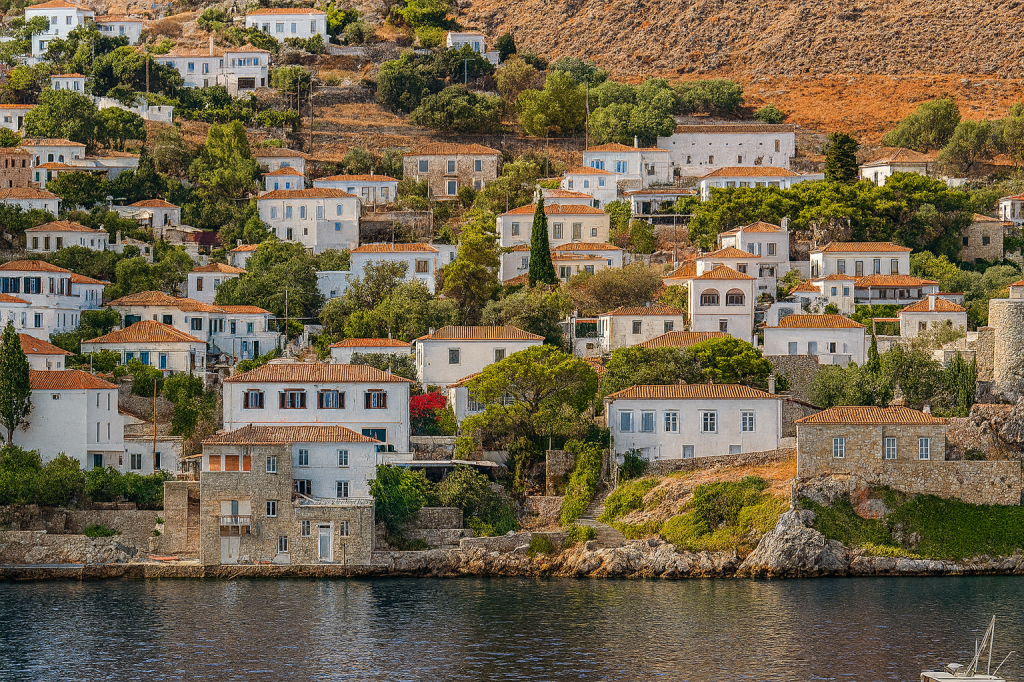
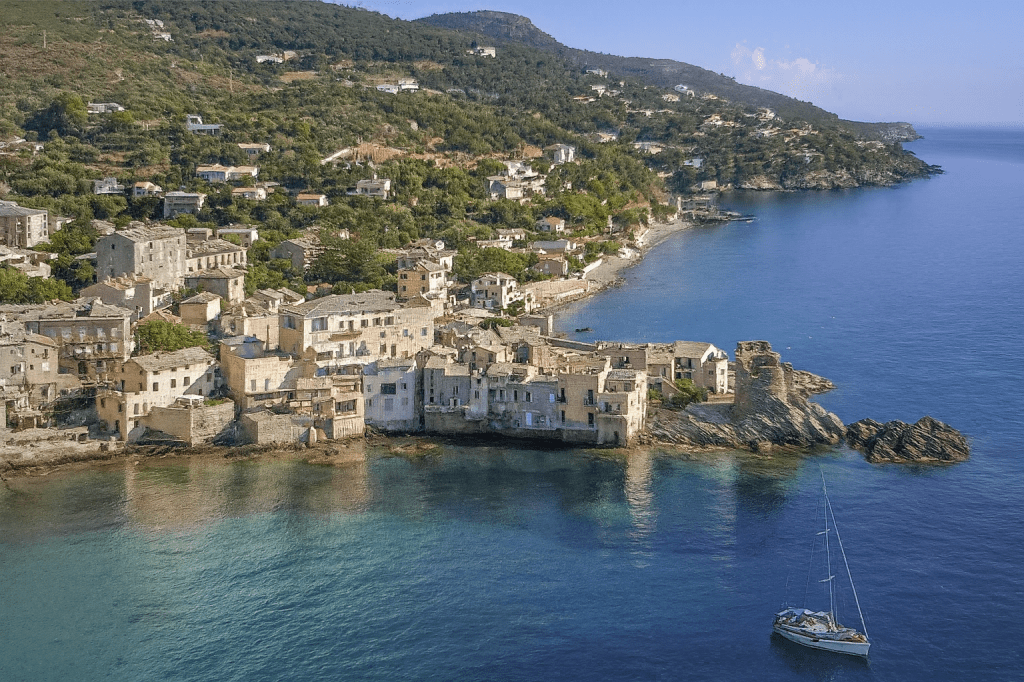
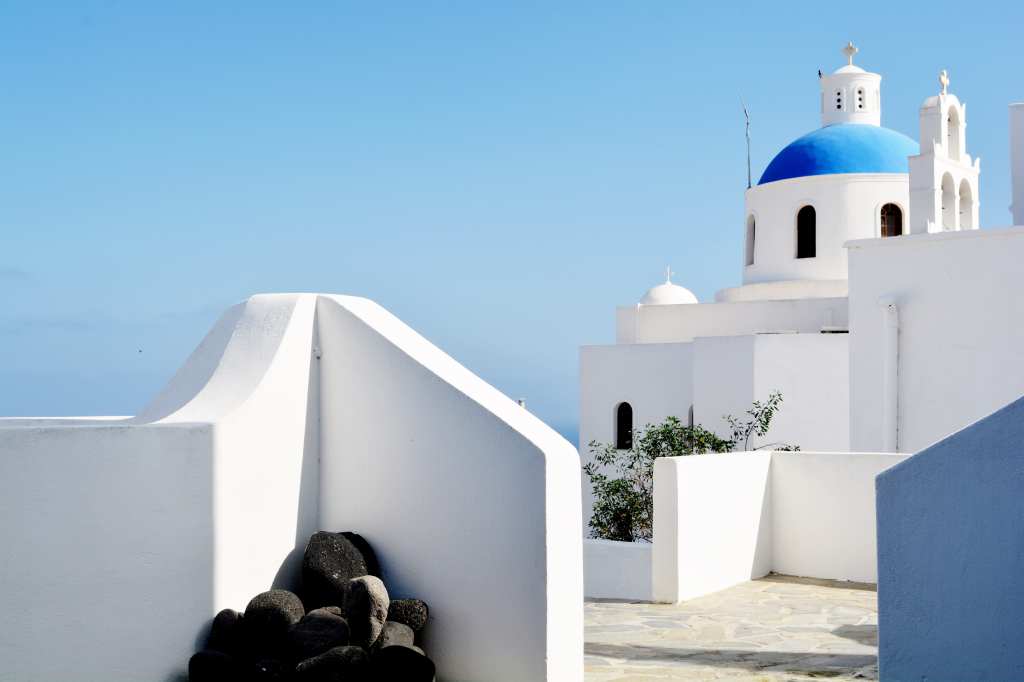
    Traditional Greek coastal village with white stone houses and terracotta roofs by the sea
    Smaller ships often dock closer to towns like this, where local life begins just steps from the gangway.

    A Calmer Sensory Environment

    The atmosphere is more boutique hotel than floating resort. Quiet isn’t something you search for; it’s built into the experience. Picture yourself on deck at 10 p.m., the only sound the gentle hiss of waves against the hull.

    For travelers who crave depth, presence, and a gentler pace, this is where small ships shine.

    The Big-Ship Experience After 50: Abundance, Entertainment, and Stability

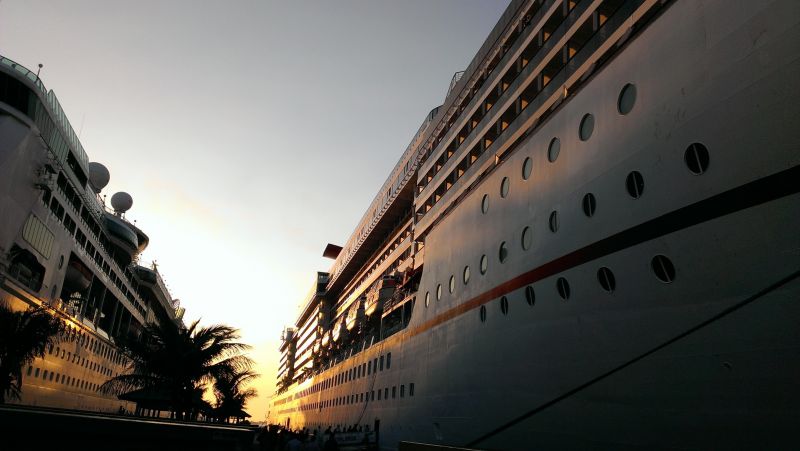
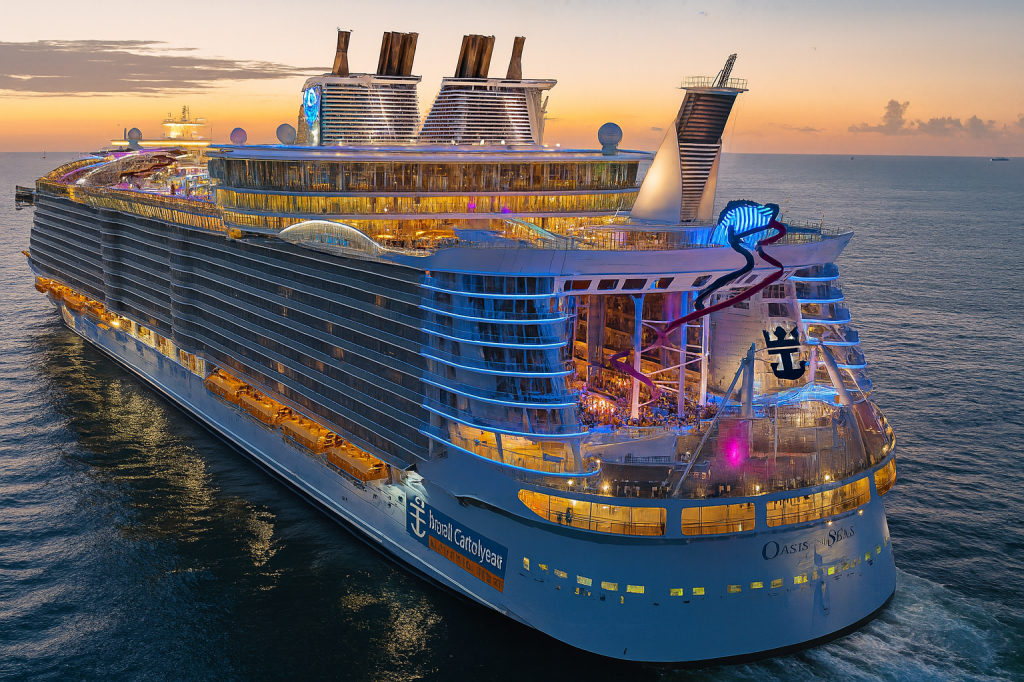
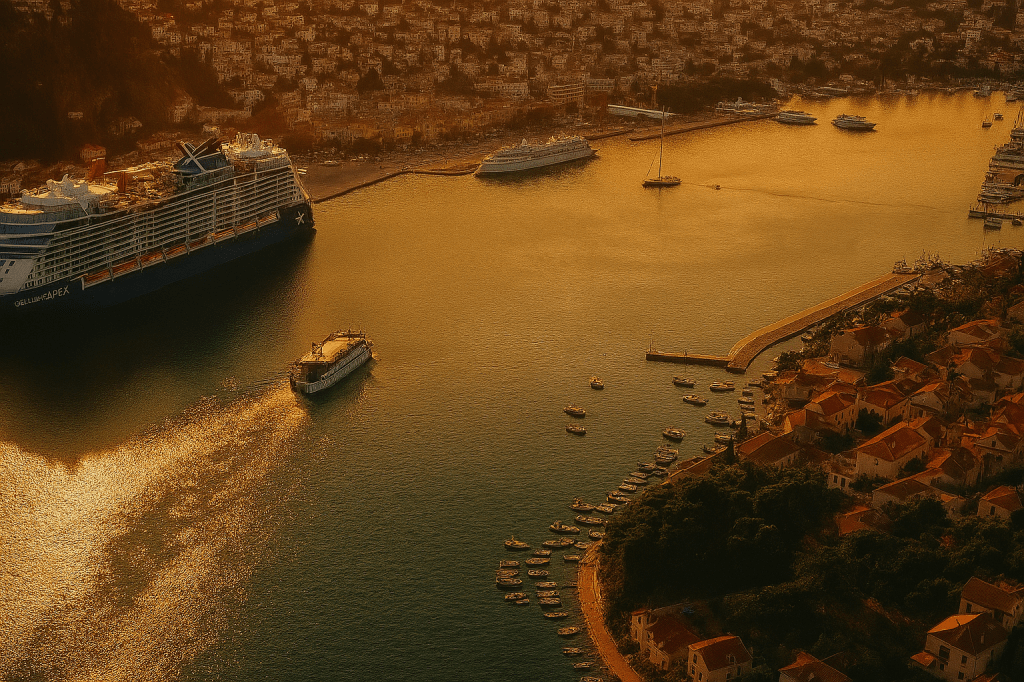
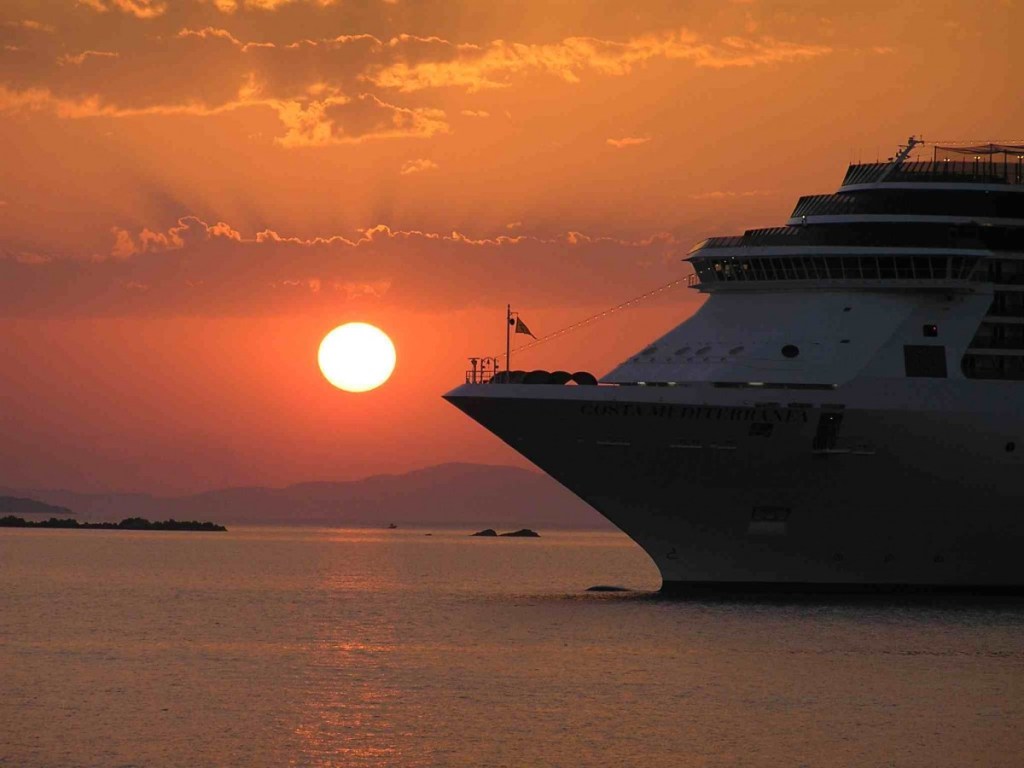
    Large modern cruise ship sailing at sunset with illuminated upper decks
    Large ships deliver scale, spectacle, and a resort-style atmosphere at sea.

    A Floating Resort With Endless Options

    Big ships are built for choice. Multiple restaurants, each with its own aromas and energy. Broadway-style shows. Spas, gyms, lounges, libraries. Quiet corners if you know where to look. You could fill your days without ever touching land.

    For some travelers, this feels like freedom that’s a buffet of possibilities.

    More Stability in Rough Seas

    Size matters when the ocean gets moody. Big ships often feel steadier, offering reassurance to anyone sensitive to motion. You can sit at dinner with a glass of water that barely ripples, even when the waves are flexing their muscles.

    Entertainment Without Effort

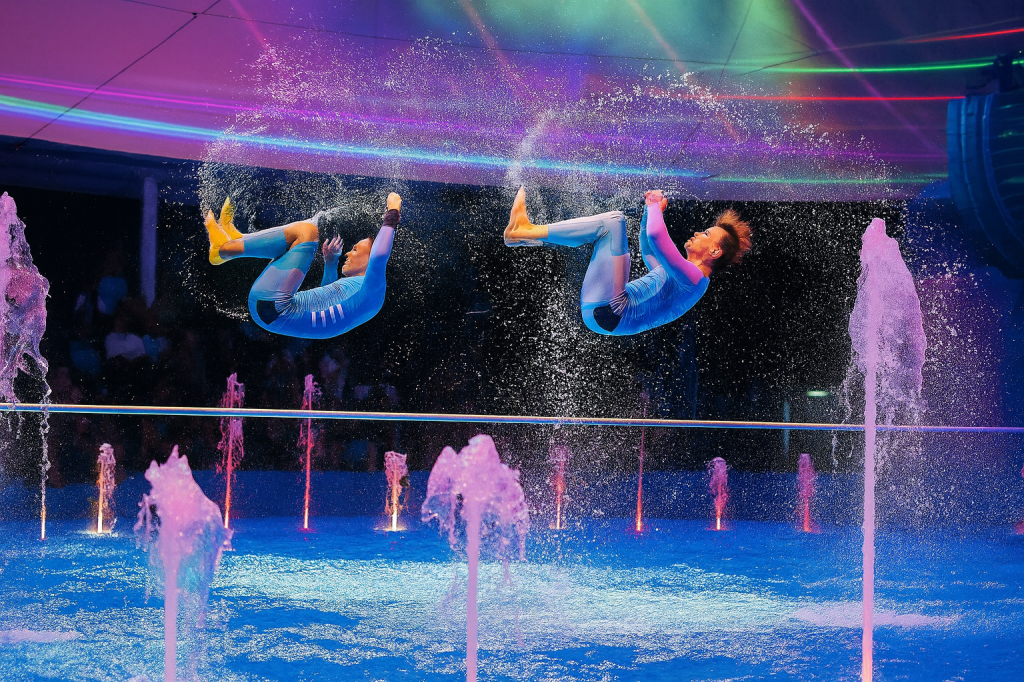
    Aerial acrobats performing over a pool on a large cruise ship entertainment deck
    From acrobatic water shows to live performances, big ships offer built-in evening entertainment.

    You don’t have to plan. You don’t have to research. You can simply wander and discover: trivia here, live music there, a comedy show after dinner. Follow the sound of laughter or the scent of fresh pastries and see where it leads.

    A Broader Mix of Ages

    Big ships attract families, groups, and multigenerational travelers. This can feel lively and joyful or chaotic, depending on your mood and cabin location. If you crave quiet, early mornings on deck or tucked-away lounges become your sanctuary.

    What Actually Feels Better After 50

     small ship vs large ship

    Here’s the truth most cruise marketing avoids: the best ship is the one that matches your energy.

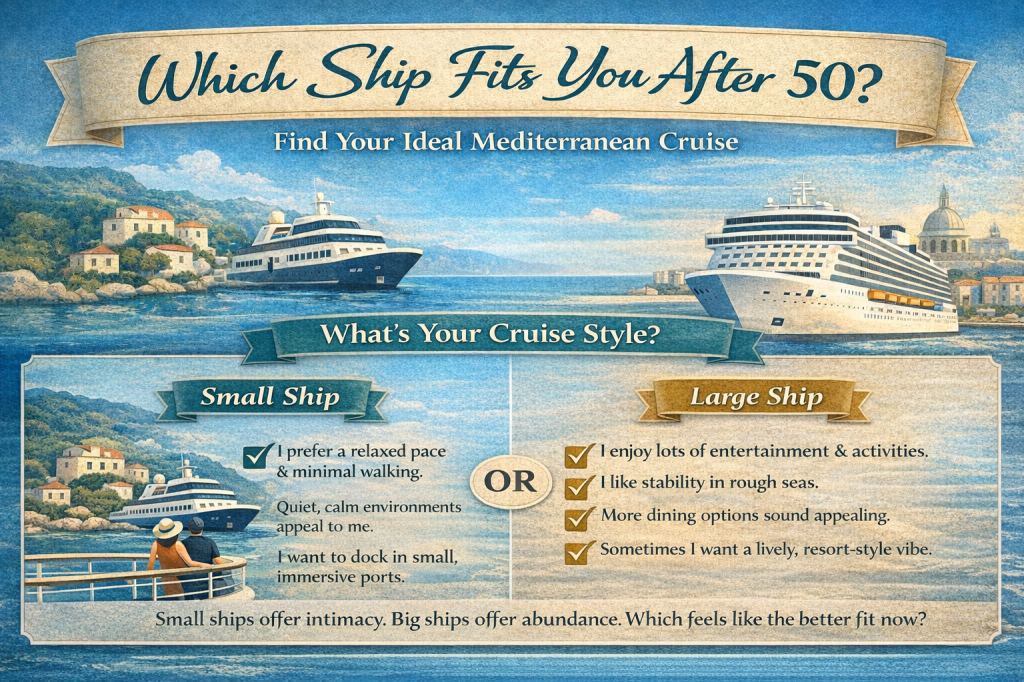
    Which of these feelings lights you up?

    Choose a small ship if you want:

    • A slower, more intentional pace
    • Easy movement around the vessel
    • A quieter sensory environment
    • More immersive ports
    • A boutique-hotel-at-sea feeling

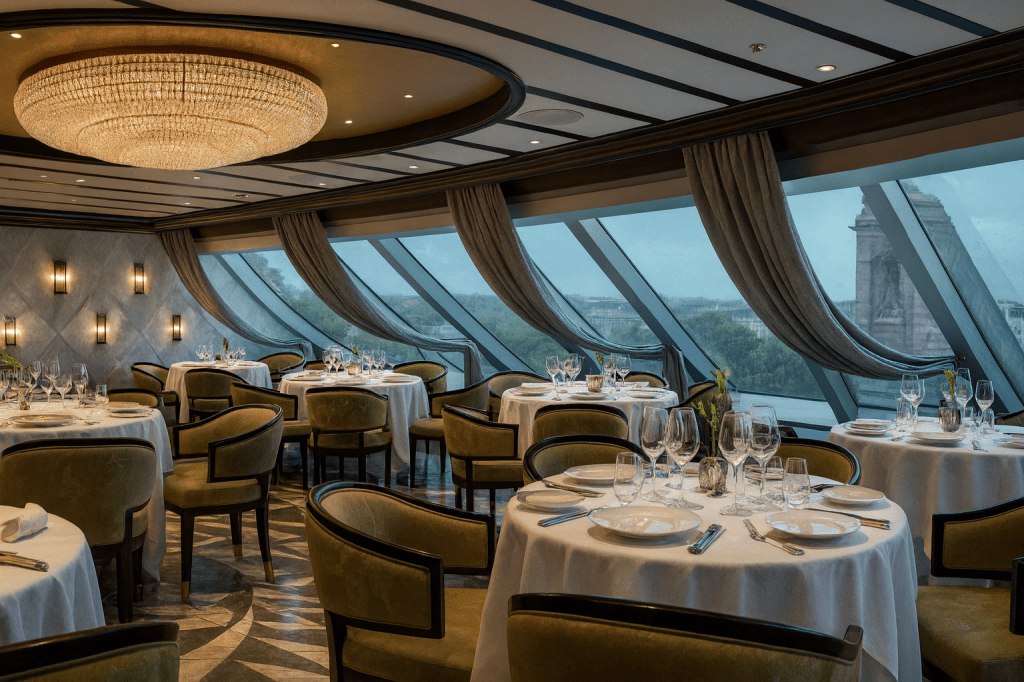
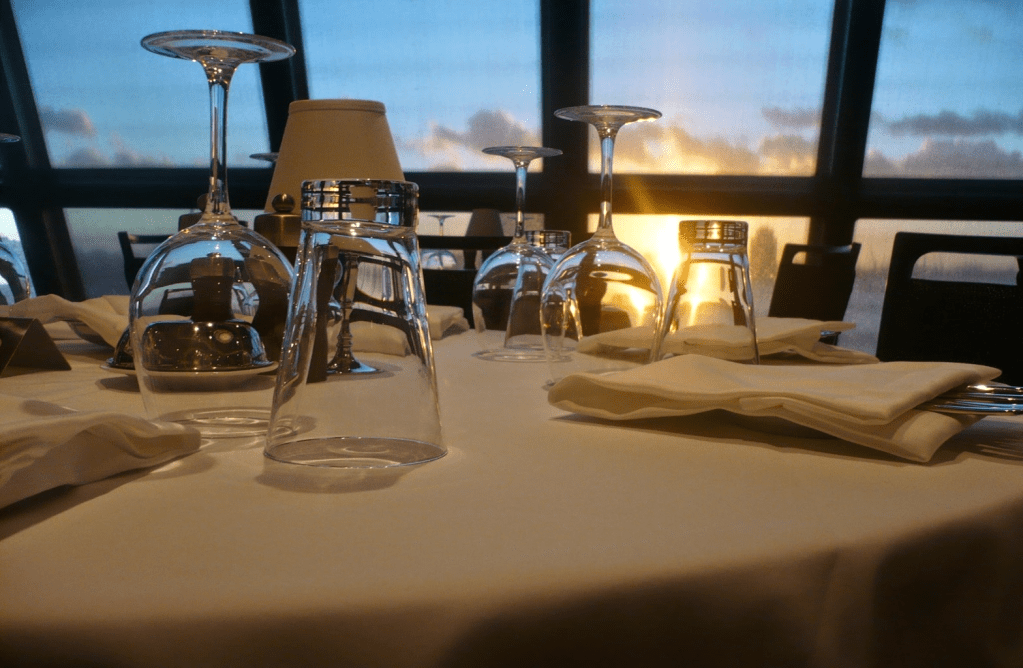
    Elegant small cruise ship dining room with round tables and panoramic windows
    On smaller ships, dining feels intimate and unhurried — more boutique hotel than floating resort.

    Choose a big ship if you want:

    • Variety and stimulation
    • Evening entertainment
    • More dining choices
    • Stronger motion stability
    • A resort-style experience

    This isn’t about age. It’s about alignment, what feels nourishing, what feels manageable, what feels like the right container for the kind of travel you want to do now.

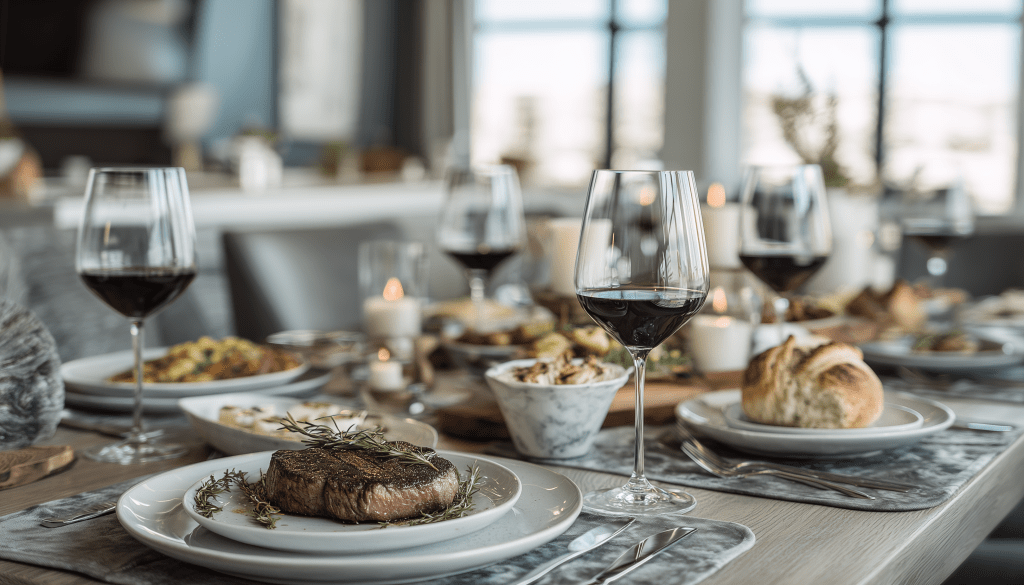
    Steak dinner with red wine served in cruise ship specialty restaurant
    Multiple specialty restaurants are part of the appeal on larger vessels.

    What About Price?

    • Small ships are typically more expensive per night but often include excursions, drinks, and gratuities.
    • Large ships may have lower base fares, but add-ons can increase the final cost.
    cruise style - small ship vs large ship

    If this is a once-every-few-years trip, the choice matters. The wrong atmosphere can leave you overstimulated or underwhelmed. The right ship feels effortless from the first afternoon onboard.

    Choosing the Right Cruise Ship After 50

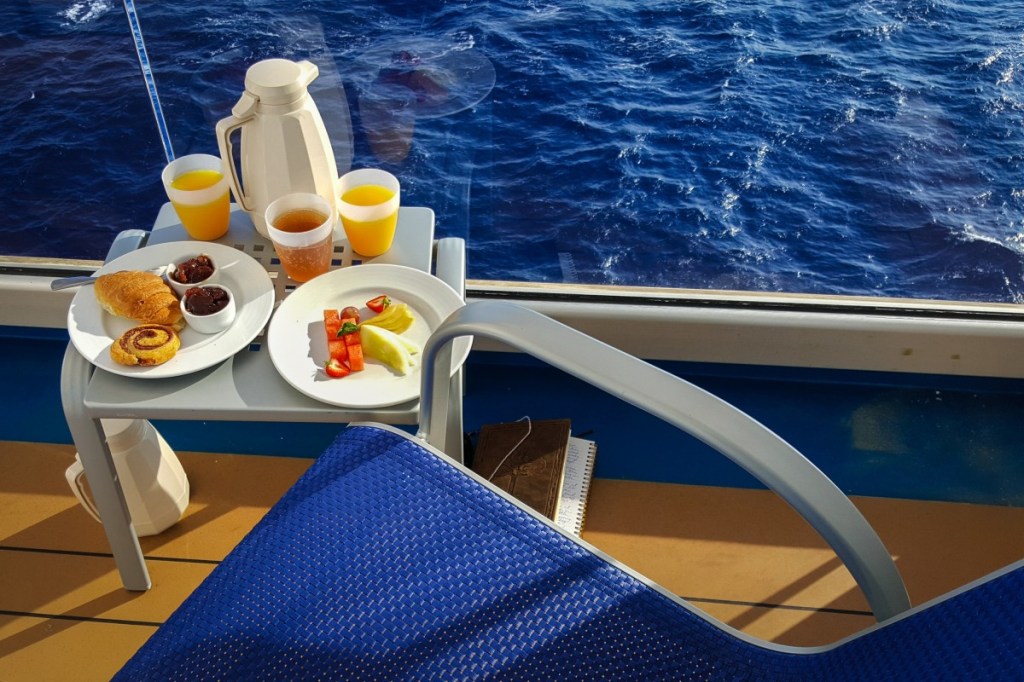
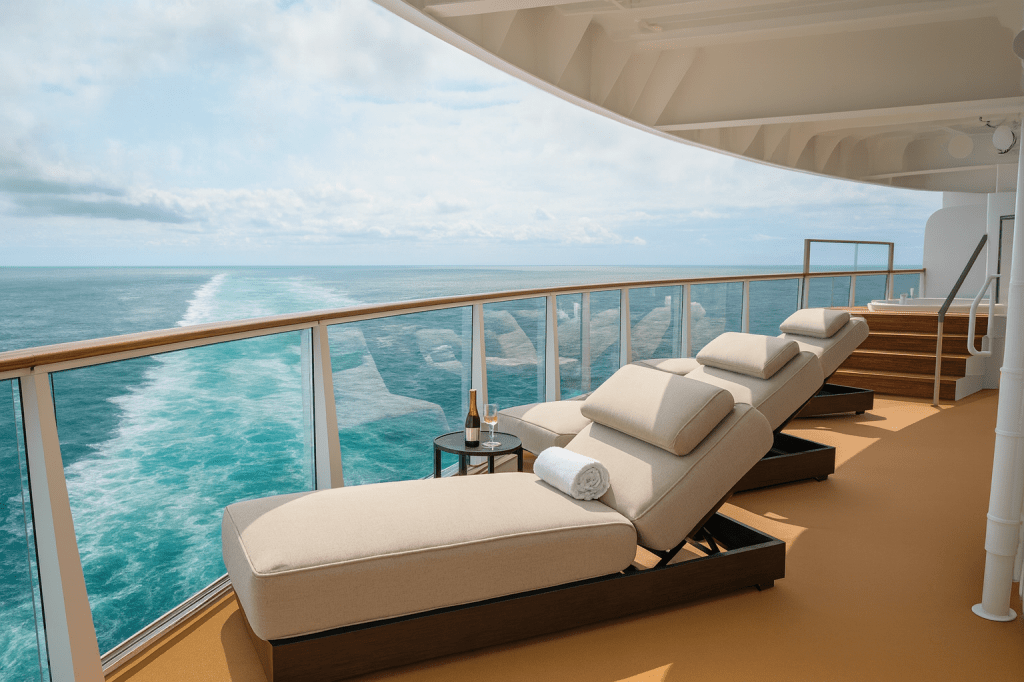
    Cruise ship balcony with two chairs overlooking the ocean wake
    The best cruise choice is the one that matches your pace and your priorities.

    After 50, travel isn’t about packing in as many sights as possible. It’s about choosing experiences that resonate and enrich your life. Small ships offer intimacy. Big ships offer abundance. Both can be extraordinary, but only one will feel like the right fit for the version of you stepping onto the gangway today.

    So, which horizon calls your name right now?  

    After 50, the goal isn’t to cruise bigger or smaller. It’s to cruise wiser.

  • Balcony vs. Inside Cabin: How to Choose the Right Cruise Cabin After 50

    Balcony vs. Inside Cabin: How to Choose the Right Cruise Cabin After 50

    After 50, cruising becomes less about squeezing in everything. It focuses more on comfort. Ease and small details make travel enjoyable. Choosing the right cabin plays a bigger role than many travelers expect. Here’s how to decide between a balcony and an inside cabin. Consider what matters most: sleep, mobility, budget, health, and how you plan to spend your time onboard.

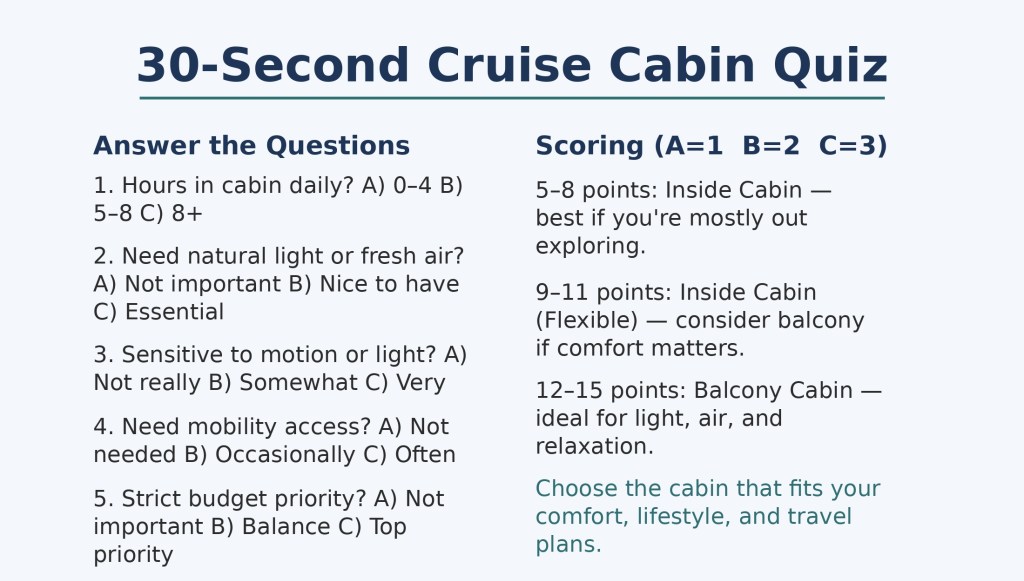
    Quick self-quiz: What’s your ideal cruise cabin?

    Check to see which cabin fits your travel style:

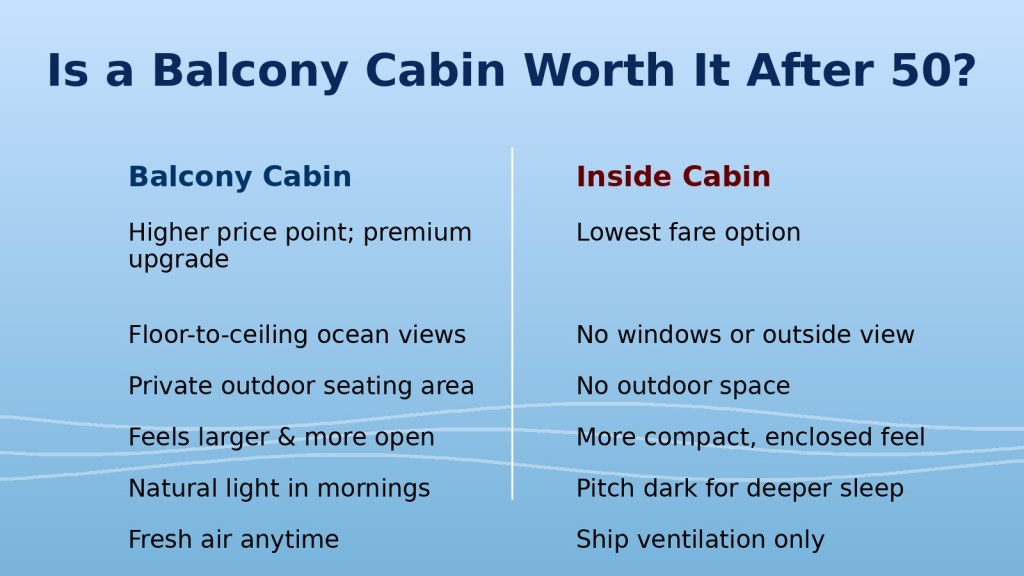
    Side-by-side comparison

    When a balcony is worth the extra cost

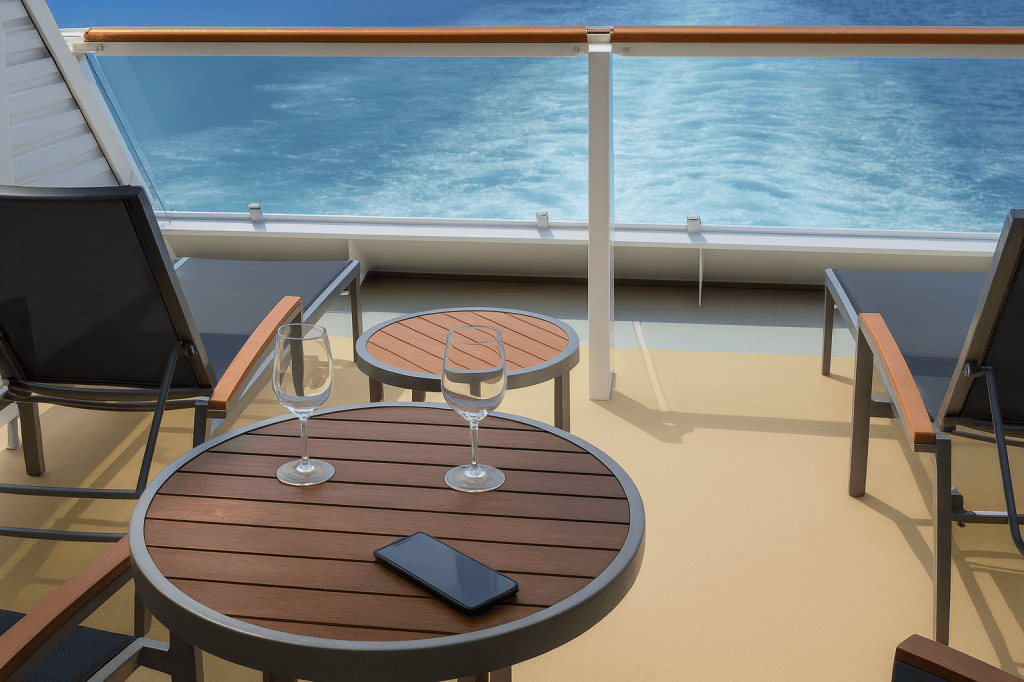
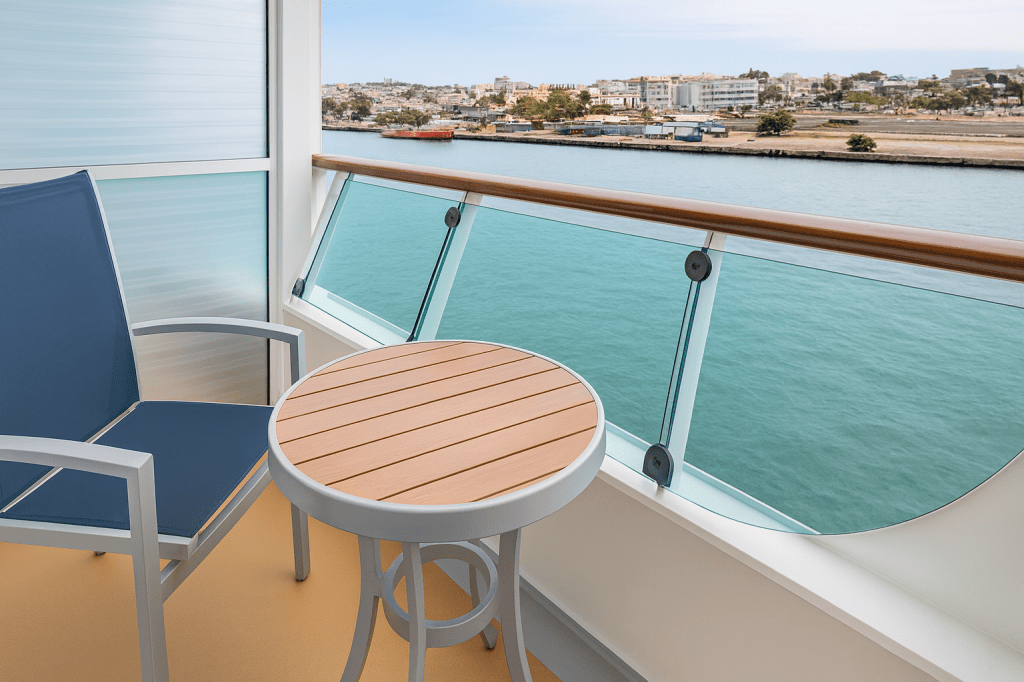
    A balcony can add a layer of comfort and independence to your cruise. Imagine waking to the sound of waves and stepping outside for a breath of fresh air before breakfast. That small bit of private outdoor space can noticeably change how the cruise feels day to day.

    Pick a balcony if you want natural light and a private spot to enjoy your morning coffee. On most mainstream cruise lines, interior and balcony cabins in the same category often differ. The difference is only 20–40 square feet inside. The primary difference is the outdoor space.

    Practical reasons to pick a balcony

    • You enjoy calm mornings with a view.
    • You want a private place to sit without navigating crowded decks.
    • You’re taking a more extended cruise and expect to spend more time in your cabin.
    • You’re willing to reallocate budget from extras to cabin comfort. Price differences can be substantial, sometimes twice the cost of the cheapest inside fare.
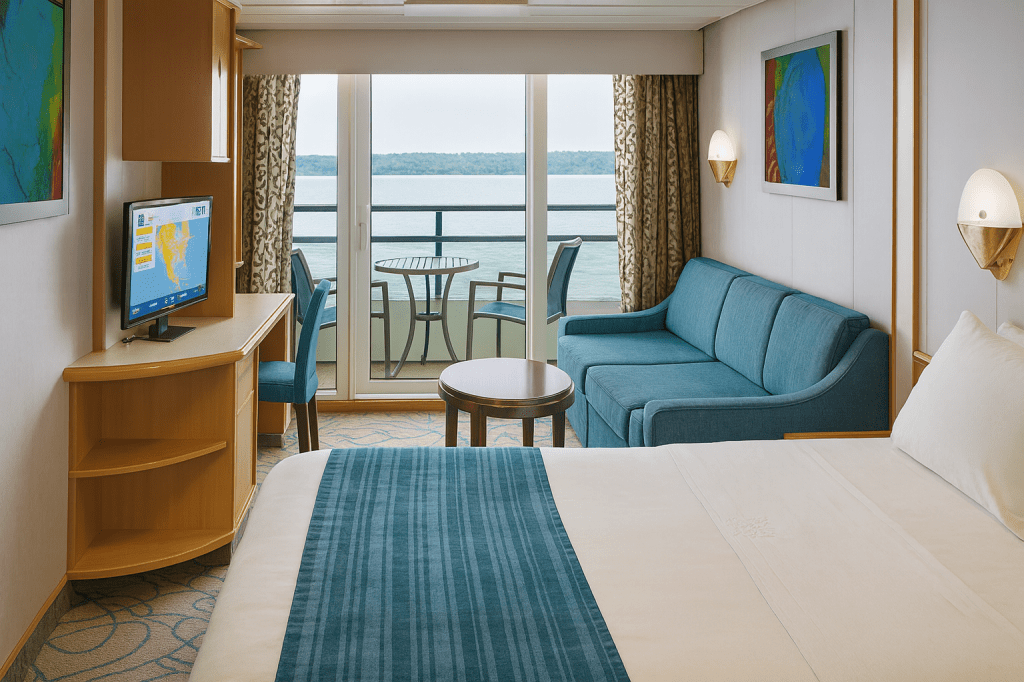
    Balcony cruise cabin interior with sofa, desk, and sliding glass doors leading to a private balcony with ocean view.
    Natural light and easy balcony access can change how a cruise feels day to day.

    When an inside cabin is the smarter choice

    Choose an inside cabin if you want to save money. It is also a good choice if you prefer to sleep in total darkness. Consider it if you won’t be in your room much. These cost-effective options let you redirect your savings toward experiences off the ship. The savings can often cover multiple shore excursions, specialty dining, or a pre- or post-cruise hotel stay. If you’ll be out most of the time, you probably won’t miss the balcony.

    Practical reasons to pick an inside cabin

    • You sleep best in total darkness.
    • You want the lowest possible fare.
    • You expect to spend little time in the cabin.
    • You’re booking a short cruise or a port-heavy itinerary.
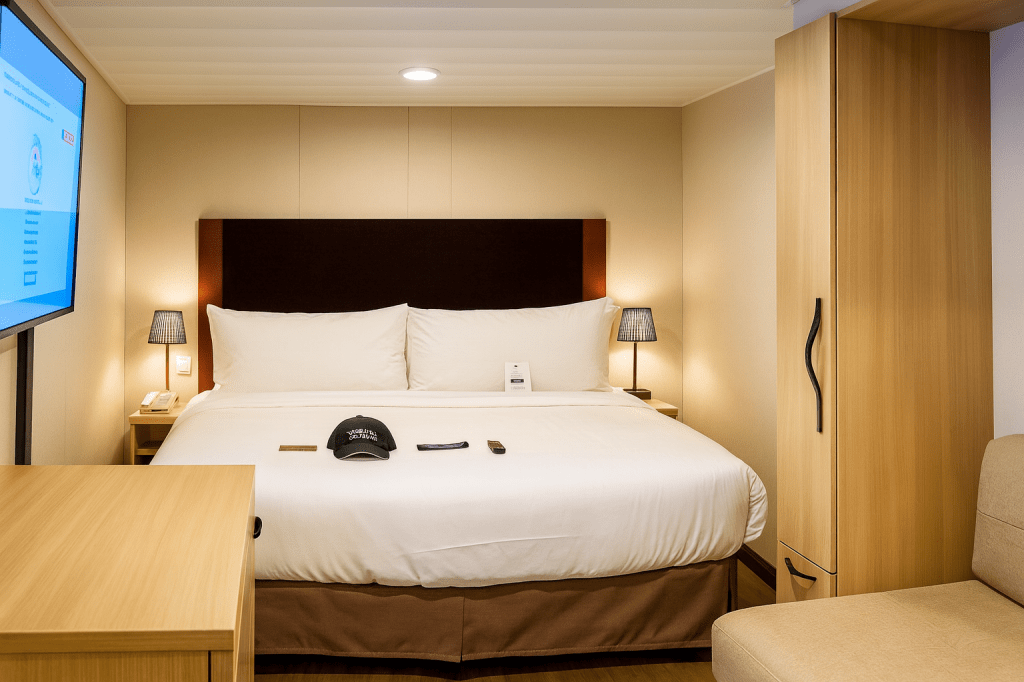
    With no windows and total darkness, inside cabins can offer some of the best sleep at sea.

    Accessibility, Mobility, and Health Considerations

    • Mobility aids: Balcony thresholds and outdoor furniture can reduce maneuvering space. Typical balcony door widths are around 24 inches (61 cm), but this varies by ship. Always confirm door width and layout before booking.
    • Balance and seasickness: Some travelers feel better seeing the horizon. Others prefer a dark interior space to reduce perceived motion. Your past experience matters more than theory.
    • Noise and light: Balconies near public decks or lifeboats can be noisy. Interiors near elevators or machinery also experience noise. Review deck plans and recent passenger reviews.

    Balcony cabins offer access to fresh sea air, according to Cruise Nonstop. This can be especially helpful for passengers who prefer natural ventilation. Inside cabins rely on the ship’s HVAC system. This can be a meaningful advantage if you have respiratory sensitivities.

    Money talk: Is the balcony worth it?

    Compare total trip cost, not just the fare. Port fees, gratuities, and onboard spending do not change with cabin type. Hence, a higher cabin fare reduces your discretionary budget.

    On many sailings, upgrading from an inside to a balcony can add $40–$100 per person, per day. The cost varies depending on itinerary and demand. Use that difference to calculate what experiences you’d give up to upgrade.

    • Look for deals and timing: Balcony prices fluctuate with demand and itinerary. Off-peak sailings and last-minute upgrades at embarkation can narrow the gap.
    • Try a mental exercise to help decide: Ask yourself. What two extras are you willing to skip for the luxury of a balcony? This can be a helpful way to rank what truly matters in your cruise experience and avoid any regrets later.
    On scenic itineraries, a balcony can make sail-ins and sail-aways feel more personal.

    How to book smart: questions to ask the cruise line or travel agent.

    • Exact cabin square footage and deck plan location.
    • Is the balcony obstructed or facing lifeboats/public areas?
    • Are there accessible cabins with balconies, and what are the door widths?
    • What recent cabin reviews say about noise and light?
    • Is there a chance of an upgrade at embarkation, and what are the typical costs?

    Before booking, review deck plans, confirm square footage, read recent cabin reviews, and verify accessibility details. If your itinerary includes scenic cruising days, factor that into your decision.

    Bottom line

    There’s no universally “better” cabin. Only the one that fits how you travel now.

    Choose a balcony if outdoor space and fresh air enhance your experience. Choose inside if maximizing value and sleep quality are more important.

    The right decision supports your comfort, budget, and travel pace. It is not what anyone else says is best.

  • What’s the Best Mediterranean Cruise Length for Travelers Over 50

    What’s the Best Mediterranean Cruise Length for Travelers Over 50

    Finding Your Perfect Cruise Length

    How long should you spend on a Mediterranean cruise after 50? It’s a practical question and an important one. This region offers many ports, cultures, and experiences. Choosing the right cruise length can leave you feeling enriched rather than exhausted.

    The sweet spot depends on what you want from the journey. A week offers an excellent introduction to Rome, Barcelona, and the French Riviera. Cruises lasting 10 to 12 days let you settle into the Mediterranean rhythm. You can explore ports more deeply. You also enjoy local food and markets without feeling rushed. For travelers who value comfort and unhurried discovery, the extra days make a noticeable difference.

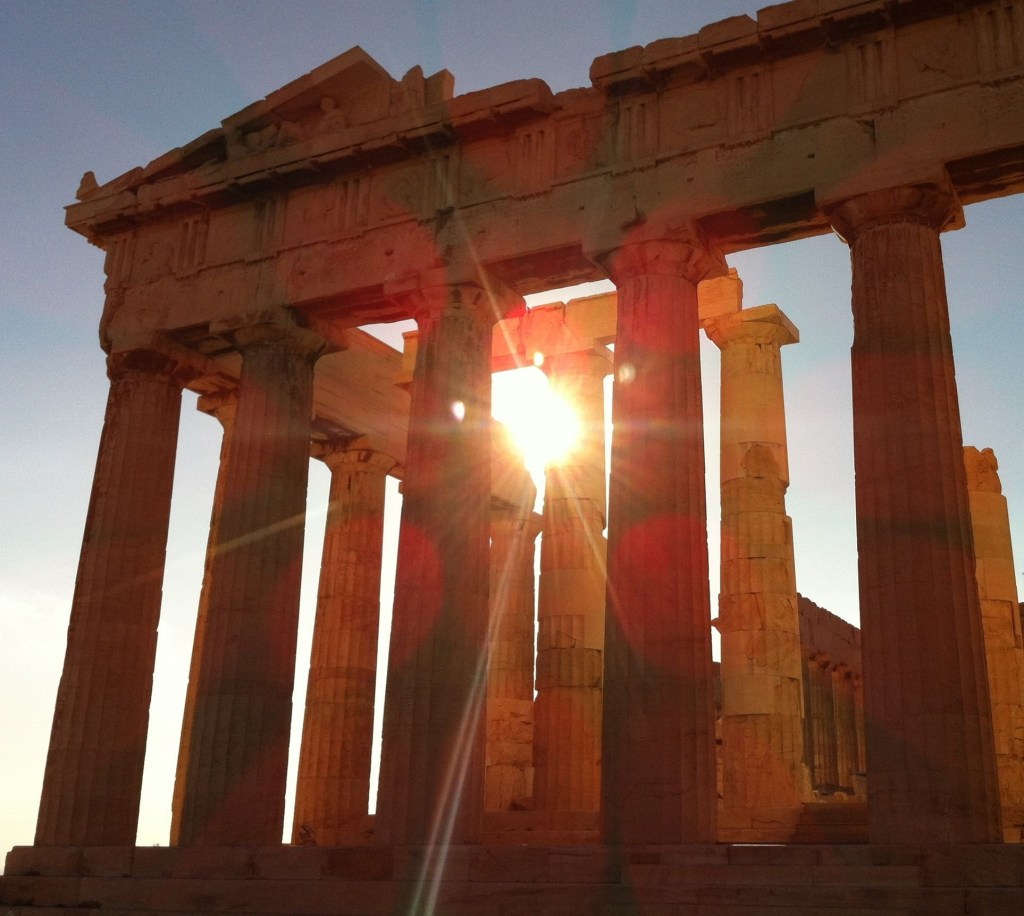
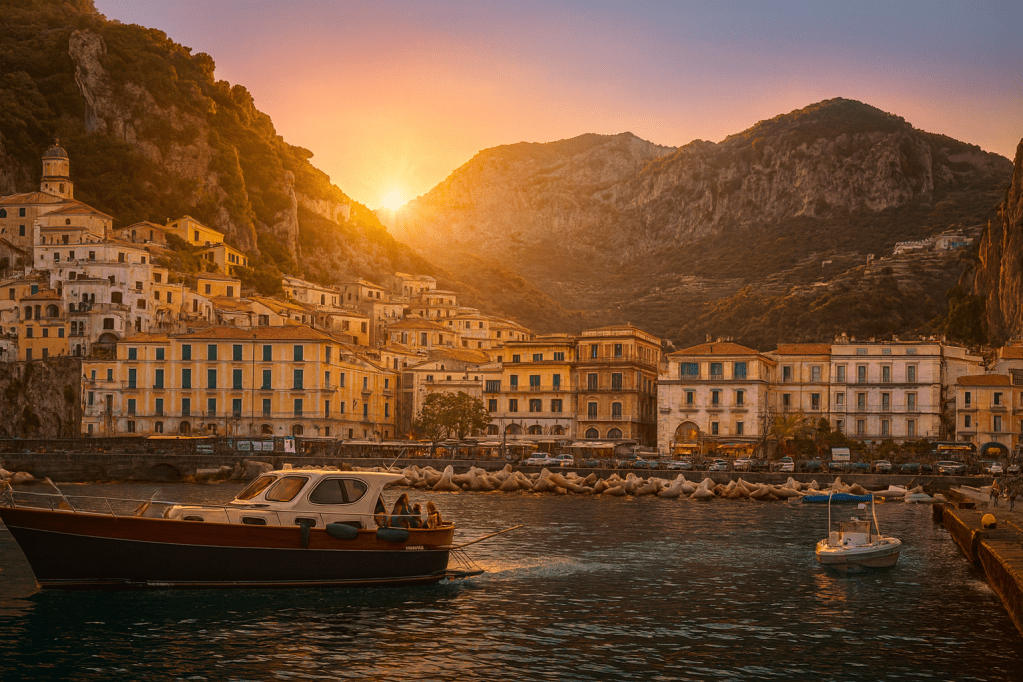
    A week introduces you to places like this. Ten days allow you to truly explore them.

    Travelers looking to truly unwind benefit from a longer trip. They have extra time to enjoy the scenery. They can revisit favorite spots and ease into the local rhythm.

    The beauty of cruising is the breathing room it offers. No sprinting from ship to shore and back again. Instead, you can linger over that cappuccino or wander down an interesting side street. Perhaps simply sit by the water and soak it all in. After all, the Mediterranean has been here for millennia; it’s not going anywhere.

    Most seasoned travelers in this age group find that 7 to 12 days is the ideal window. It’s long enough to explore multiple cultures and coastlines, yet short enough to feel restorative rather than exhausting.

    Why 7 to 12 Days Works So Well

    The longer the itinerary, the more time you have to appreciate the journey itself.

    A Mediterranean itinerary is rarely about a single destination. It’s about the rhythm of discovery: Italy one day, Greece the next, a quiet sea day in between. A week to twelve days gives you:

    • A balanced pace with time to enjoy both port days and onboard relaxation.
    • A mix of iconic cities and smaller, character-rich ports.
    • Enough time to settle into ship life without feeling like you’re living out of a suitcase.
    • Flexibility to choose excursions that match your energy level each day.

    Shorter and longer cruises each offer their own unique experiences. Shorter cruises focus on a burst of activity. They pack in various ports for a dynamic adventure. This approach can suit those with limited time or those eager for varied experiences in a compact window. Meanwhile, longer cruises let you savor the Mediterranean at a leisurely pace. They offer opportunities for deeper exploration. You can also enjoy more relaxing moments. Consider your personal travel style. Review your schedule. You can then choose a cruise length that aligns perfectly with your trip vision.

    Don’t Skip the Sea Days

    A quiet afternoon at sea can be just as memorable as any port.

    The value of one or two sea days is often overlooked. This is especially true for travelers over 50 on a great Mediterranean cruise.

    Port-intensive itineraries can be exhilarating. After several consecutive days of ancient ruins, busy streets, and full excursions, even seasoned travelers can feel overstimulated.

    Sea days offer a welcome reset:

    • Time to absorb what you’ve experienced.
    • A slower pace that restores energy.
    • Space to enjoy the ship with lectures, spa treatments, cooking demos, live music, or a quiet corner with a book.

    These days aren’t “lost time.” They’re what allow you to fully enjoy the next port.

    If You’re Flying From Overseas: Arrive Early

    One of the most overlooked parts of Mediterranean cruise planning is the pre-cruise arrival. If you’re coming from North America, arriving at least two days before embarkation is a gift to yourself.

    A simple, restorative plan works beautifully:

    • Day 1: Stay close to your hotel. Take a gentle walk, enjoy a leisurely meal, and let your body adjust.
    • Day 2: Explore lightly: one neighborhood, one museum, one memorable lunch.
    • Day 3: Head to the port rested, oriented, and ready to enjoy your holiday rather than recover from the flight.

    This small buffer transforms the entire experience. You board the ship refreshed, not frazzled.

    After the Cruise: Don’t Rush to the Airport

    Many Mediterranean cruises return to major cities like Barcelona, Rome, and Athens, where flights often depart late in the day. Instead of spending hours in an airport lounge, check whether your cruise line offers an extended stay program.

    Some European sailings allow guests to remain onboard for a fee. You can enjoy lounges, the pool, dining venues, and other amenities until it’s time to leave. This choice provides a civilized, low-stress way to end your vacation, especially if mobility, comfort, or timing are concerns.

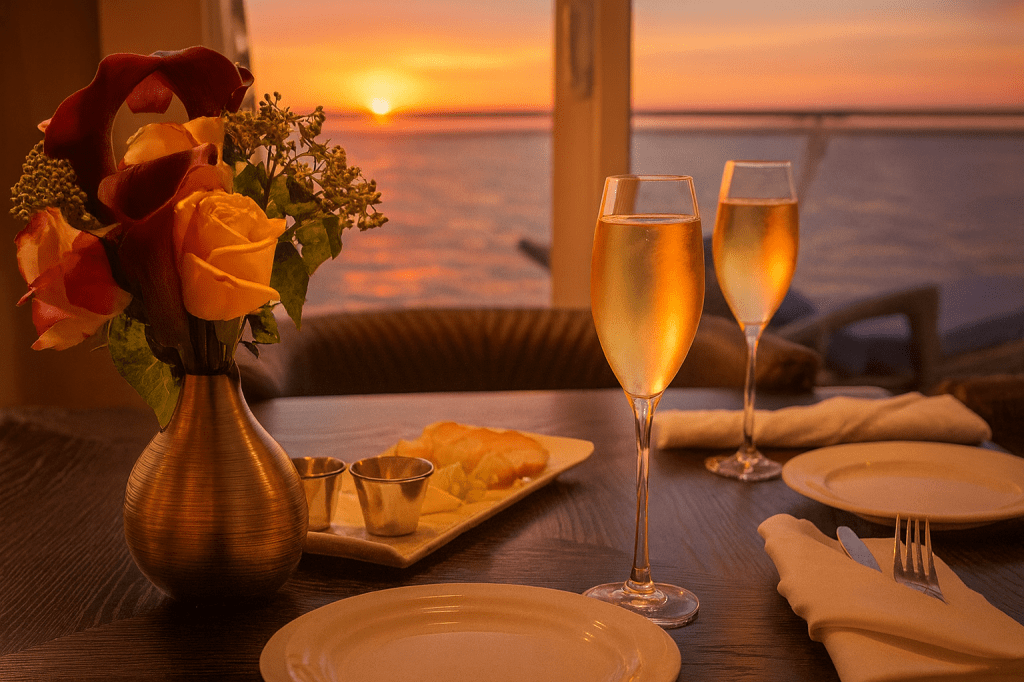
    A longer cruise isn’t just about ports. It’s about evenings like this.

    The Bottom Line

    For travelers over 50, the Mediterranean is best experienced at a pace that honors both curiosity and comfort. A 7- to 12-day cruise, paired with a thoughtful pre-cruise arrival and a relaxed departure, creates the perfect balance. You’ll see more, enjoy more, and return home feeling enriched rather than depleted.

    Planning another cruise?

    I share practical cruise guides, packing advice, and comfort-focused travel tips for travelers over 50. I also offer thoughtful recommendations along the way.
    If that sounds helpful, you’re welcome to receive new articles by email.

  • The Best Mediterranean Cruise Seasons for a Relaxed Pace

    The Best Mediterranean Cruise Seasons for a Relaxed Pace

    Why Timing Shapes the Entire Journey

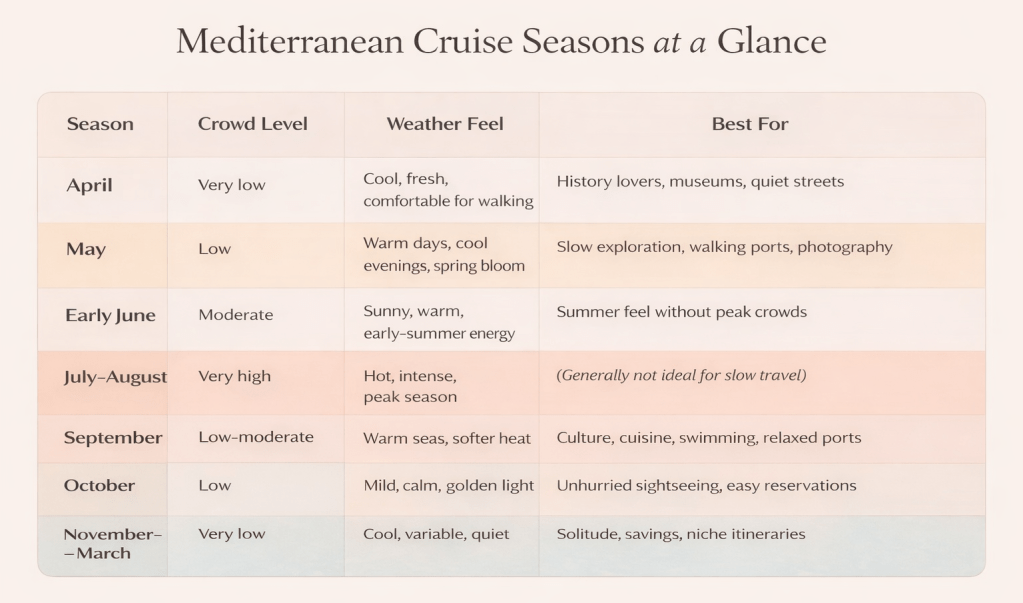
    Unlike the Caribbean tropics, where the weather is consistent, the Mediterranean changes with the seasons. Summer is hot, busy, and full of energy, which can be too much if you want peace. Winter is quieter, but it’s cooler, and there are fewer cruise options.

    The shoulder season is often a favorite. There’s more room to stroll through harbors or relax at a bistro without crowds. These months are when the region is either just coming to life or settling down. You can appreciate its beauty without the rush of peak season.

    May: The Mediterranean at Its Most Graceful

    In May, color arrives before the crowds do.

    May is the perfect month for an unhurried Mediterranean trip. Spring is in full swing, but the summer heat hasn’t started yet. The days are warm for outdoor lunches and time on deck, while evenings are still cool. Coastal towns are lively but not crowded, and locals keep the easygoing mood of early season.

    Visiting places like Rome, Florence, Athens, Dubrovnik, and Valletta will make you feel at ease. Even the most popular sites feel manageable, free from peak-season crowds. It is a time of year filled with colorful blooms and lush green hillsides.

    Be prepared for the occasional spring shower, which can make your walks even more refreshing. Some museums have shorter hours. The month of May works beautifully if you love long, unhurried days in port. It’s ideal for walking, taking photos, and exploring entirely at your own rhythm.

    September: Warm Seas and a Softer Summer Glow

    Warm seas, fewer voices, and time that stretches in September.

    May is when the Mediterranean feels fresh, and September is when it shines. The heat from July and August has faded, but the sea is still warm.  It makes it a great time to visit Greece, Croatia, and the Balearic Islands. Ports stay lively, but with fewer family vacationers, the mood is more at ease.

    Harvest season in Italy, France, and Spain occurs in September. As you stroll, you find an abundance of figs, grapes, and late-summer tomatoes.  Even local wines are at their best. Many people claim that September is the top month for enjoying culture, food, and lingering by the coast. If you want both beach time and sightseeing, September is a great choice.

    April and October: Quiet, Cool, and Culturally Rich

    Shoulder seasons of April and October leave space for stillness.

    For travelers who value tranquility, April and October are exceptional choices. These months sit at the edges of the cruise season, offering cooler temperatures and lighter crowds. The weather is crisp but comfortable. It is the perfect time for exploring ancient ruins, museums, and old towns. The atmosphere is serene, and prices are often more favorable.

    October is gently warm, especially in the southern Mediterranean. The sea may be cool in April, but in southern ports, October is often still warm enough for swimming. The Mediterranean in October has a quiet beauty, as the region slows down after the busy summer.

    Both months suit travelers who crave quiet streets and easy restaurant reservations. They’re perfect for anyone who wants a more intimate connection with each destination. April leans cooler and quieter; October offers warmth with a softer, golden light.

    Early June: A Sweet Spot Before the Surge

    Early summer evenings in June linger a little longer.

    Early June is a short but great time to visit before summer is in full swing. The days are long and sunny, and the sea is warm enough for swimming. Ports feel lively without ever tipping into overwhelming. It’s perfect if you want a summer vibe without the big crowds. By the middle of June, things get busier, and the easy rhythm starts to disappear, so timing matters. Because it’s such a narrow window, early June sailings tend to book quickly.

    Winter: Peaceful, Affordable, and Niche

    A seasonal snapshot for choosing the pace that suits you during winter.

    From November through March, the Mediterranean enters its quietest phase. Many cruise lines reposition their ships, and itineraries become limited. The weather can be cool and unpredictable, and some coastal towns slow down dramatically.

    Even so, winter has its own appeal. Prices are lower, crowds are minimal, and destinations like the Canary Islands enjoy mild weather year-round. If you want solitude and don’t mind cooler temperatures, winter can be a peaceful choice. It won’t be the typical Mediterranean trip.

    Choosing the Right Season for Your Style

    A serene Mediterranean cruise isn’t just about skipping the crowds. It’s about matching your trip to the feeling you want to have along the way.
    • For warmth and calm: May or September
    • For culture and quiet: April or October
    • For a touch of summer without chaos: Early June
    • For solitude and savings: Winter

    Each season offers its own version of serenity. Choose the month that aligns with how you want to move through the world. It should support a pace that feels slow, intentional, and spacious enough to savor every moment.

    Some journeys are shaped by when you go.

    In the Mediterranean, the right season doesn’t rush you; it meets you where you are.

  • Mediterranean Cruises: Ports Where Staying on the Ship Is the Best Choice

    Mediterranean Cruises: Ports Where Staying on the Ship Is the Best Choice

    Sometimes the most memorable moments happen when you stay on board.

    You don’t have to end every Mediterranean port stop feeling tired or wondering if it was worth it. Sometimes, the best way to relax is to stay on the ship while others head out. Timing makes all the difference. A port that’s crowded and hot in July can be peaceful in October. Here’s a look at which ports you want to skip, and when that might change.

    When Staying Onboard Makes Sense

    Ports where timing matters more than effort alone

    Santorini, Greece: Summer Madness, Autumn Magic

    A quiet October morning in Oia feels nothing like August.

    Visiting Santorini by cruise ship in summer can be tough. During peak season, thousands of passengers head to the same small port. Tender boats take you to shore, but then you face a bottleneck. Cable cars with two-hour waits, donkey rides up 600 steps, or walking those steps in the heat.

    Once you reach Fira, the narrow streets are packed. Restaurants have long waits, viewpoints are crowded with people taking photos, and the town feels overwhelmed. Shopkeepers are busy, and the visit can feel stressful instead of special.

    When it works: If you visit Santorini in October or early November, the experience is much better. The weather stays pleasant, with temperatures in the mid-70s instead of the mid-90s, and there are far fewer people. In October, cable cars run without long waits. Restaurants seat you quickly, and you can walk through Oia at your own pace. Late September and October cruises let you see the Santorini everyone talks about. The town is much more enjoyable when it isn’t crowded.

    Livorno, Italy: The Florence Distance Problem

    Florence is one of Europe’s best cities, but its distance from Livorno makes visiting tricky. The port is 60 miles away, and it takes about 90 minutes each way if traffic is light. Getting to Florence also means extra travel costs. A round-trip taxi can cost at least €180, which is a lot for a short visit.

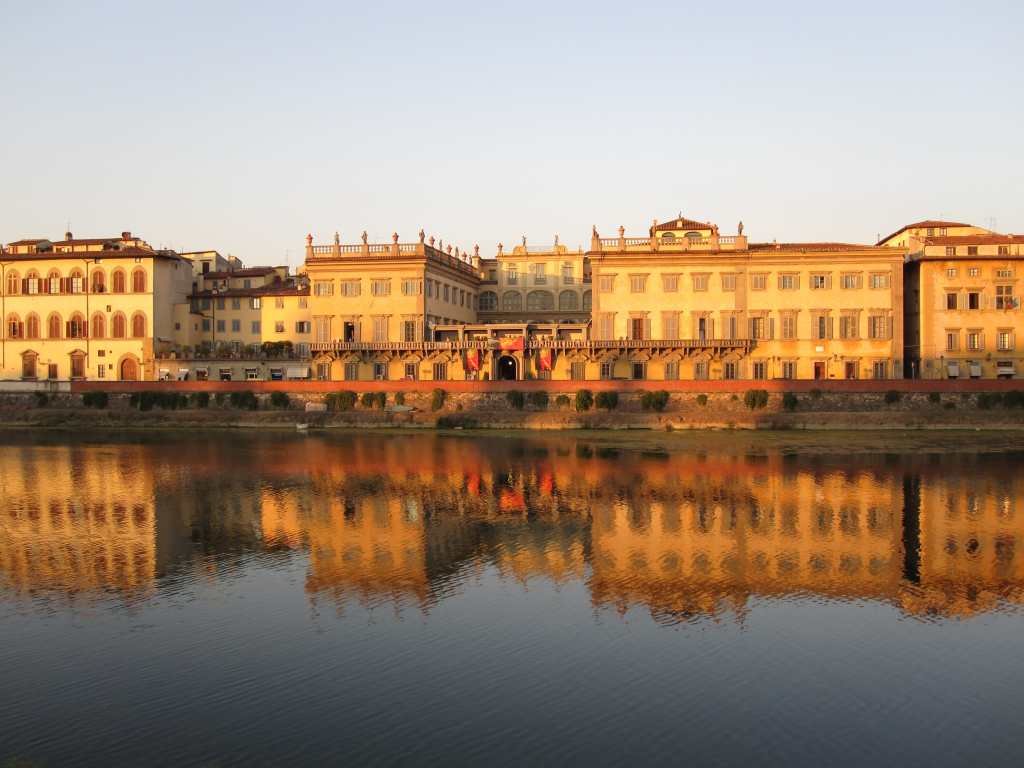
    Historic buildings along the Arno River in Florence at sunset

    Think about the timing: ships usually arrive at 8 AM and leave at 5 PM, so you have nine hours. With at least three hours spent traveling, you get about six hours in Florence. Most tours only give you two or three hours to look around. The visit feels rushed, and you end up watching the clock.

    Most people return from Florence feeling tired instead of inspired. You don’t really experience the city; you just get a quick glimpse.

    When it works: For return visits to favorite spots, the timing works. If you have your heart set on visiting Florence, look for a ship that includes overnight stays in Livorno. This will afford you time for proper exploration. Some travelers take the direct train. Others hire a private driver and focus on a single museum or landmark.

    If it’s your first time, Florence is worth more than a rushed day trip. Staying on the ship and enjoying the spa, quiet decks, or the empty pool can be more relaxing. Florence is best enjoyed on a more extended land visit.

    Valletta, Malta: The Three‑Ship Problem

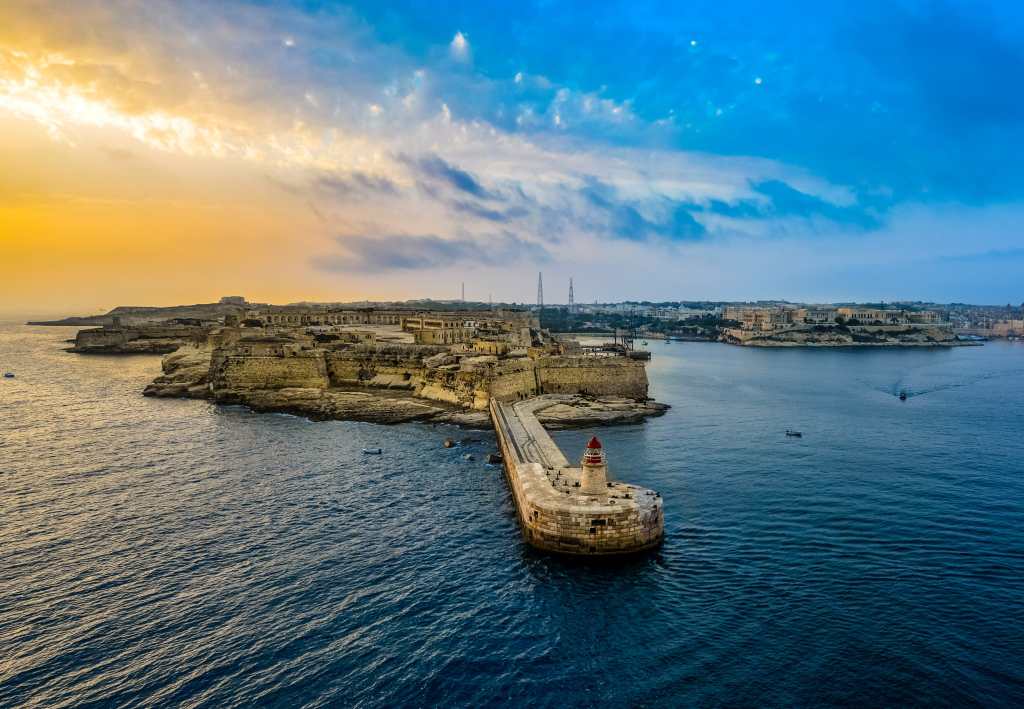
    Valletta harbor and lighthouse viewed from the sea at sunrise

    Valletta is beautiful, with a rich history, striking buildings, and a harbor that looks like a movie scene. But your experience depends a lot on how many ships are in port.

    Malta gets over 300 cruise ships each year. If you’re the only ship or one of two, Valletta is wonderful. But when three or four big ships arrive at once, which often happens in summer, the city gets too crowded. In the heat, hills, stairs, and narrow streets fill fast, and lines form at most sights. With such a small city, it’s hard to escape crowds, and getting to the beaches takes time.

    When it works: Check the port schedule. In shoulder season from April to May or late October to November, Valletta shines. If you’re the only ship in port, it’s especially worth exploring. Its UNESCO status is well earned. And if you’re drawn to the Knights’ history or want to see the Caravaggio in St. John’s Co‑Cathedral (book ahead), the experience can be wonderful.

    On busy summer days when several ships are in port, it’s often more enjoyable to stay on the ship.

    Civitavecchia (Rome), Italy: The Impossible Day Trip

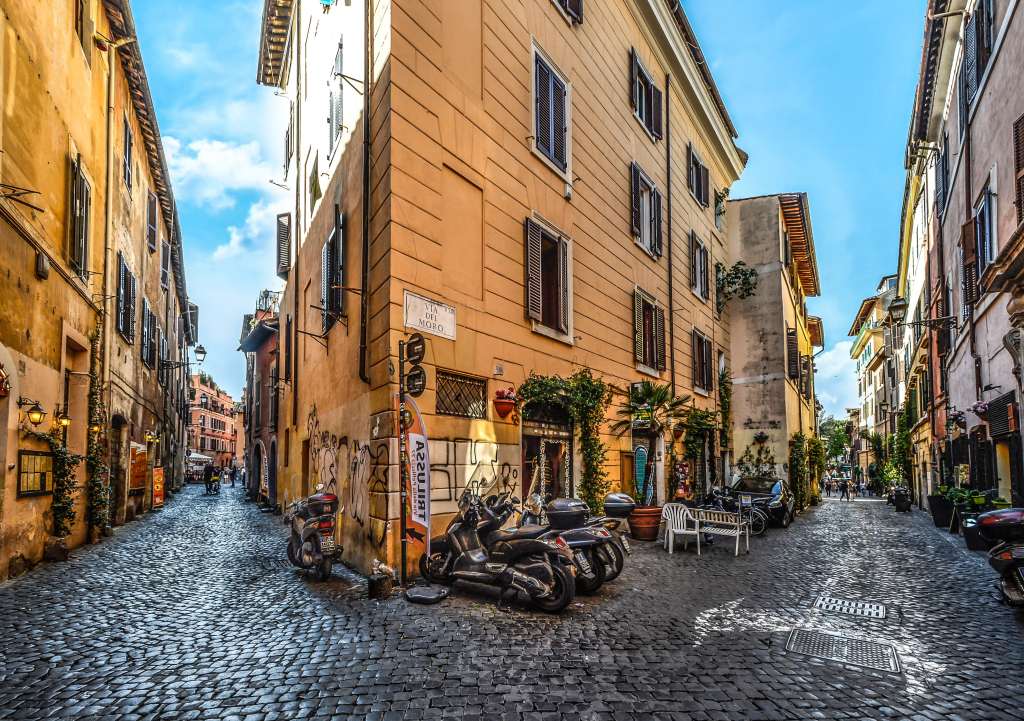
    Quiet cobblestone street in Rome with scooters and historic buildings

    Rome is very difficult to experience well during a cruise port call, especially during busy summer days. Civitavecchia is about 50 miles away, 75 minutes by train or longer by bus. You’ll lose about three hours to transport. That leaves maybe six in a city where even a week barely scratches the surface.

    Shore tours in Rome move fast. You’ll see the Colosseum from the outside. Then, squeeze in 20 minutes at the Trevi Fountain. Catch a quick peek at the Vatican, and then it’s back to the bus. Often, you spend more time in traffic than actually experiencing Rome. Most people come back feeling tired, not inspired. The Eternal City deserves more than a hurried glimpse.

    Civitavecchia is mostly a working port and doesn’t have much for tourists. Yet, heading into the center of Civitavecchia does offer a museum and plenty of places to dine.

    When it makes sense: If you’ve explored Rome before, the timing can work beautifully. It’s ideal when you’re returning to one beloved spot, whether a favorite trattoria or a single museum.

    A better strategy is to fly into Rome before or after your cruise for a proper visit. Then, when the ship stops in Civitavecchia, you can stay aboard guilt-free, enjoying the amenities and the luxury of time.

    Otherwise, treat this stop like a sea day. Enjoy the spa, sleep in, and relax. The lounge chairs around the pool will be plentiful.  Rome is worth more than a quick visit.

    The Weather Variable

    Heat, Distance, and Tendering: The Hidden Costs

    Mediterranean summers often reach 95°F (35°C) or higher, and that heat makes a big difference. Cobblestones, historic stairways, and no air-conditioned interiors can demand more from your body than you expect. In crowded areas, these challenges can be especially tough for older travelers or those managing health concerns.

    Many people spend a lot on excursions but end up coming back early because of the heat. It’s not your fault; that’s just how Mediterranean summers are.

    The best times to visit are September to October and April to early June. Temperatures are in the 70s, crowds are smaller, and sightseeing is much nicer. Ports that are packed in July can be great in October.

    The Tendering Factor

    Some ports use tender boats to bring passengers from the ship to shore. If everything goes smoothly, it’s fine. But if you’re the third or fourth ship at the same spot, delays can pile up.

    Waiting two hours for a tender boat is common. You lose several hours of your day before you even start exploring. If the main sights are far from the dock, it’s often not worth it.

    You can usually find out if a port uses tender boats before your cruise. If a port is already difficult and you add tendering, it’s a good reason to stay on the ship.

    Making the Decision

    Here’s an easy way to decide if you should go ashore:

    Consider these factors:

    • How many ships will be in port? (Check CruiseMapper or CruiseTimetables tools)
    • What’s the weather forecast? (Anything above 90°F deserves serious reconsideration)
    • Are you genuinely excited about the destination, or just feeling obligated?
    • Have you been before? (Return visitors can skip without guilt)
    • What’s happening onboard? (A quiet ship can be its own luxury)

    If these questions make you want to stay on the ship, you’re not wasting your cruise. You’re making a smart, thoughtful choice. Some of the best cruise days happen when the ship is nearly empty.

    The Bottom Line

    Not every port is worth your time and energy, especially if the conditions aren’t right. One of the best things about cruising is the flexibility. You’re not stuck in a hotel if you don’t like a place. The ship keeps moving whether you get off or not.


    Years of cruising Europe and planning land journeys have taught me to organize well. And sometimes, that means choosing to skip a port altogether.

    You don’t have to go ashore at every stop. Save your energy for the places you really want to see or visit at the best time of year. You paid for the ship’s amenities, too. Sometimes, the best choice is to stay on board and enjoy them.

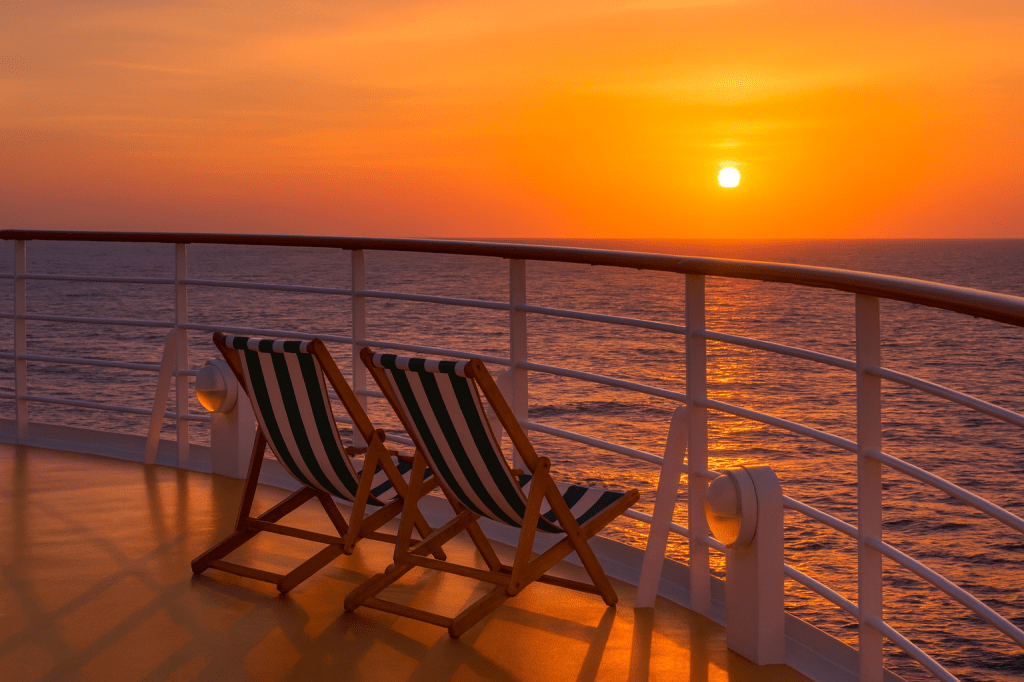
    Empty deck chairs on a cruise ship at sunset overlooking the ocean

    The goal isn’t to see everything. It’s to enjoy the experiences that matter most. Quality always matters more than quantity.

    Some links on this site are affiliate links. This means I may earn a small commission at no extra cost to you. I only recommend experiences I truly value.

  • Mediterranean Cruise Ports That Truly Reward Slow Travel

    Mediterranean Cruise Ports That Truly Reward Slow Travel

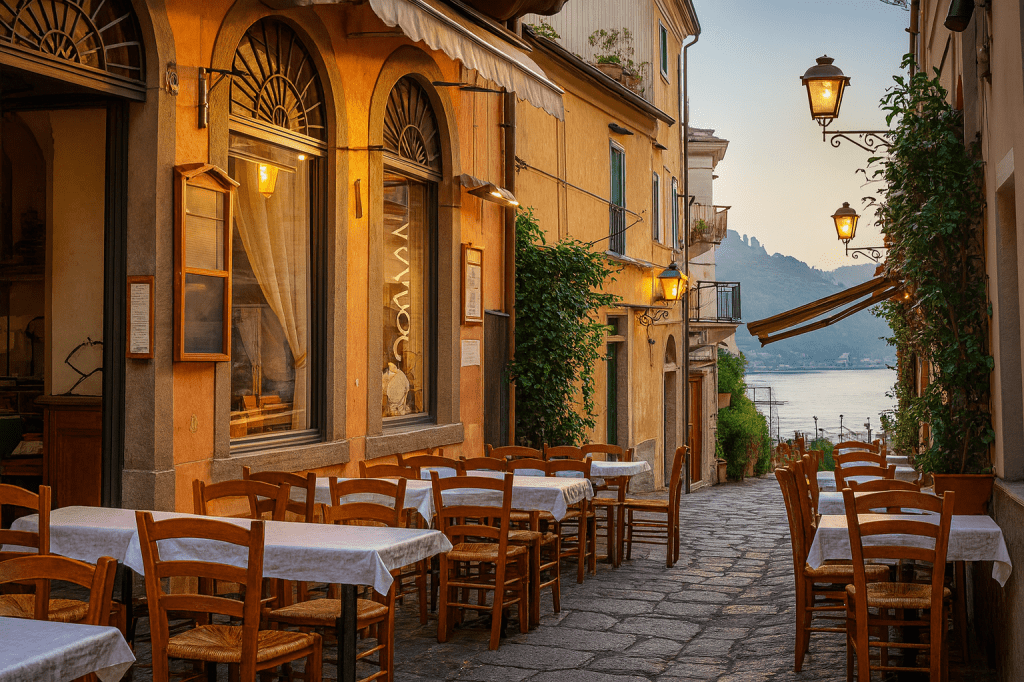
    Slow travel ports let you experience the Mediterranean at a relaxed pace. Picture sipping coffee in a quiet harbor café, listening to the waves. When the crowds leave, these places feel more welcoming. Local life becomes more visible, and new rules help prevent overcrowding from large cruise ships. In these ports, you can enjoy walking, visiting markets, and having small, memorable experiences. You get to truly connect with the place, rather than just passing through.

    “The best Mediterranean ports don’t demand your energy.
    They reward your attention.”

    Barcelona, Spain            

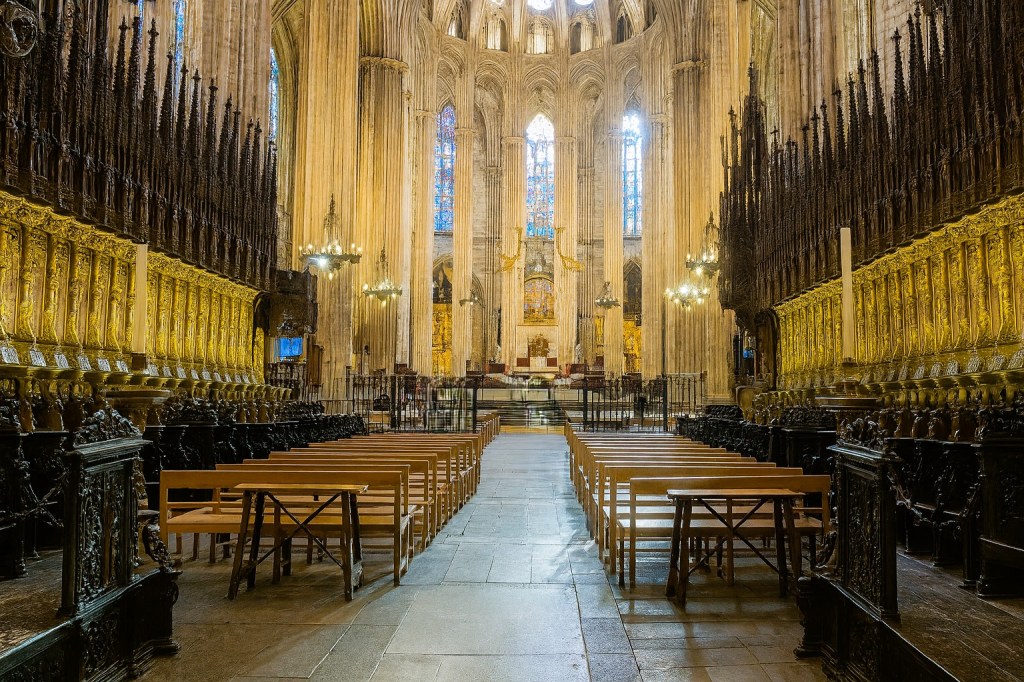
    Barcelona, after the crowds drift away.
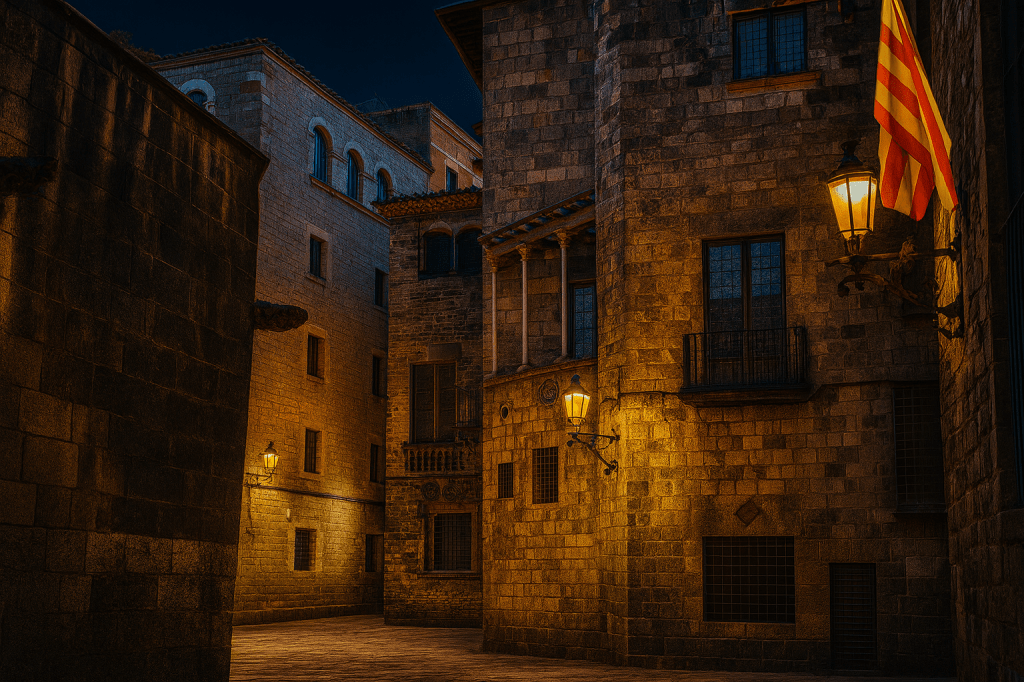
    Cooler months transform Barcelona into a calmer, more intimate city. With fewer crowds, you can wander effortlessly through Gaudí’s masterpieces. Linger in sun‑splashed plazas, and enjoy long, scenic walks along the waterfront. The softer light of winter and early spring makes the city feel even more cinematic

    • Accessibility First: The Eixample district features wide, flat boulevards. Most Metro stations are equipped with elevators. This setup makes navigation simple for those avoiding steep climbs.
    • Cultural Density: The Gothic Quarter, El Born, and multiple Gaudí masterpieces are packed into a walkable core. This allows for deep exploration without long transit times.
    • Slow Travel Highlights:

    The “Green Axis” Stroll: Walk the newly pedestrianized Consell de Cent; it’s filled with benches and local cafes for people-watching.

    Santa Caterina Market: A quieter, more authentic choice to Boqueria, where you can chat with vendors about seasonal produce.

    • Why it rewards slow travel: New sustainability rules reduce cruise congestion. This lets you explore historic neighborhoods at your own pace. There are no summer crowds, just plenty to see and enjoy.

    Mallorca (Palma & Smaller Ports)

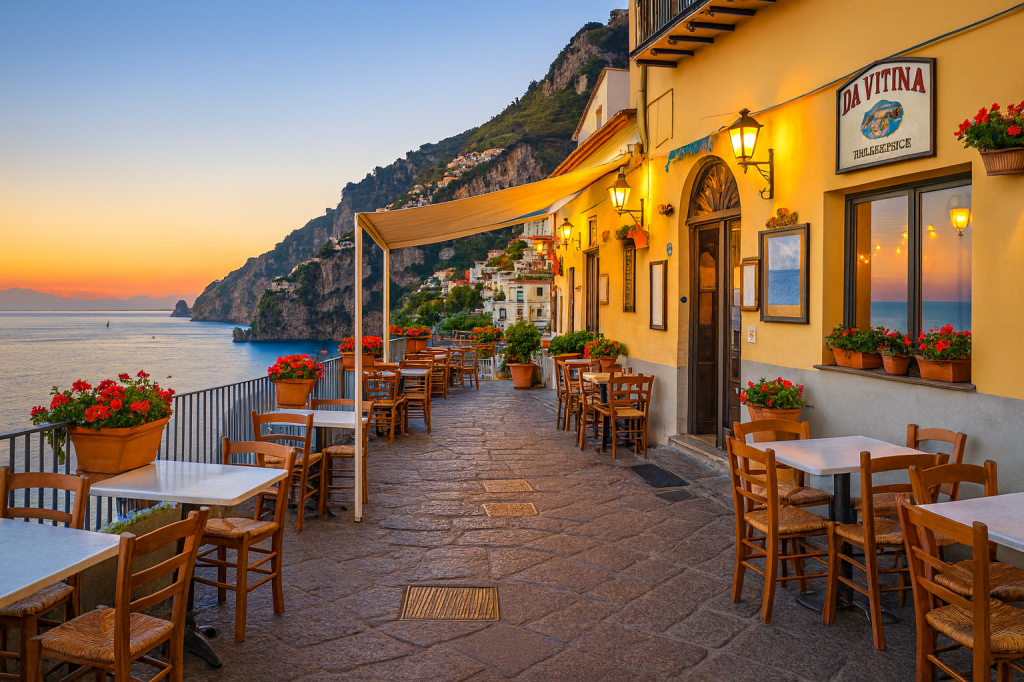
    In Mallorca, distance shrinks and details matter.

    Winter and spring bring a gentle, golden quiet to Mallorca. Palma’s historic streets feel more spacious, and the island’s smaller ports become perfect for slow coastal strolls. Expect crisp mornings, bright afternoons, and just enough chill for a stylish light jacket.

    • Accessibility First: Palma’s waterfront is famously flat and paved. It’s perfect for a long, effortless seaside stroll. You can walk from the cathedral to Portixol.
    • Cultural Density: Within a half-mile radius of the Cathedral (La Seu), you’ll find the Royal Palace. The Contemporary Art Museum is also nearby. Additionally, there are dozens of historic courtyards.
    • Slow Travel Highlights:

    The Vintage Train to Sóller: This 1912 wood-paneled train moves slowly through the mountains, making for a truly relaxed outing.

    The Secret Patios: Take a quiet walk through the Old Town. Peek into the shaded, fern-filled courtyards of medieval manor houses.

    • Why it rewards slow travel: ruise ship limits help keep crowds down. Village markets and seaside cafés feel more local and welcoming.

    Nice / Villefranche-sur-Mer, France

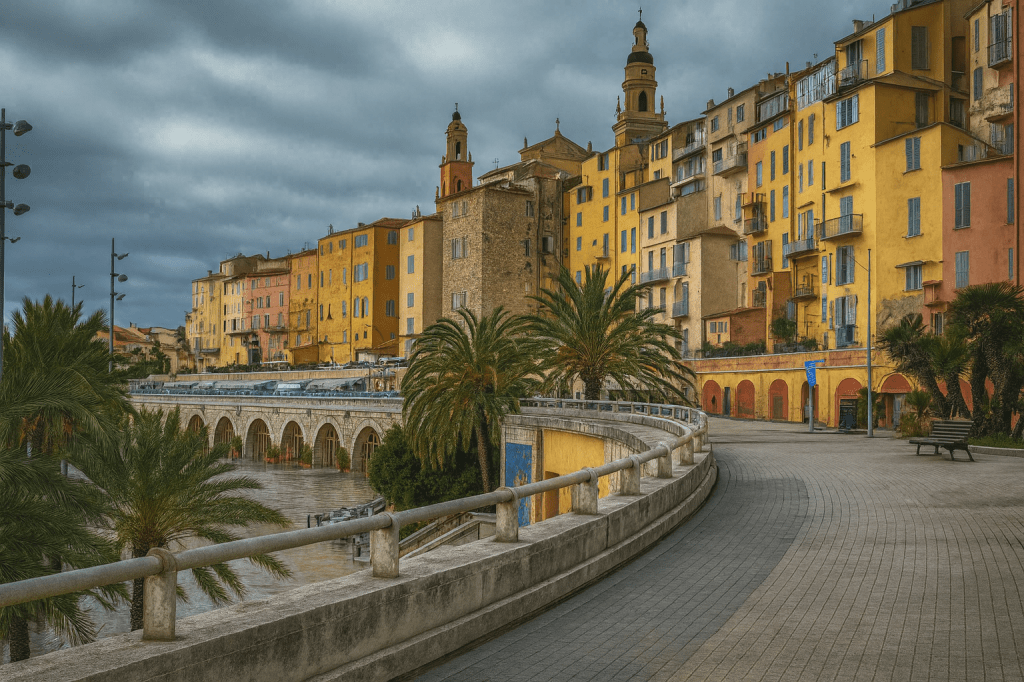
    The Riviera slows down between café pauses.

    Strict limits on ship size and daily arrivals mean every visit feels curated rather than crowded. Travelers get a more personal experience of the Riviera’s pastel villages, seaside promenades, and effortless French charm, all without the summer rush

    • Accessibility First: The Promenade des Anglais offers miles of flat, paved walking with iconic blue chairs perfectly positioned. This is ideal for resting and watching the waves.
    • Cultural Density: Old Nice (Vieux Nice) is a dense maze of history, art galleries, and specialty shops. They are all clustered near the daily flower market.
    • Slow Travel Highlights:

    Cimiez Olive Grove: A short taxi ride leads to the Matisse Museum. Within is the peaceful olive grove where locals play pétanque.

    The Sentier du Littoral: A flat coastal path in Villefranche that offers breathtaking views at a leisurely walking pace.

    • Why it rewards slow travel: The port’s new rules help create a quieter, more comfortable Riviera experience. It’s perfect for relaxing in a café.

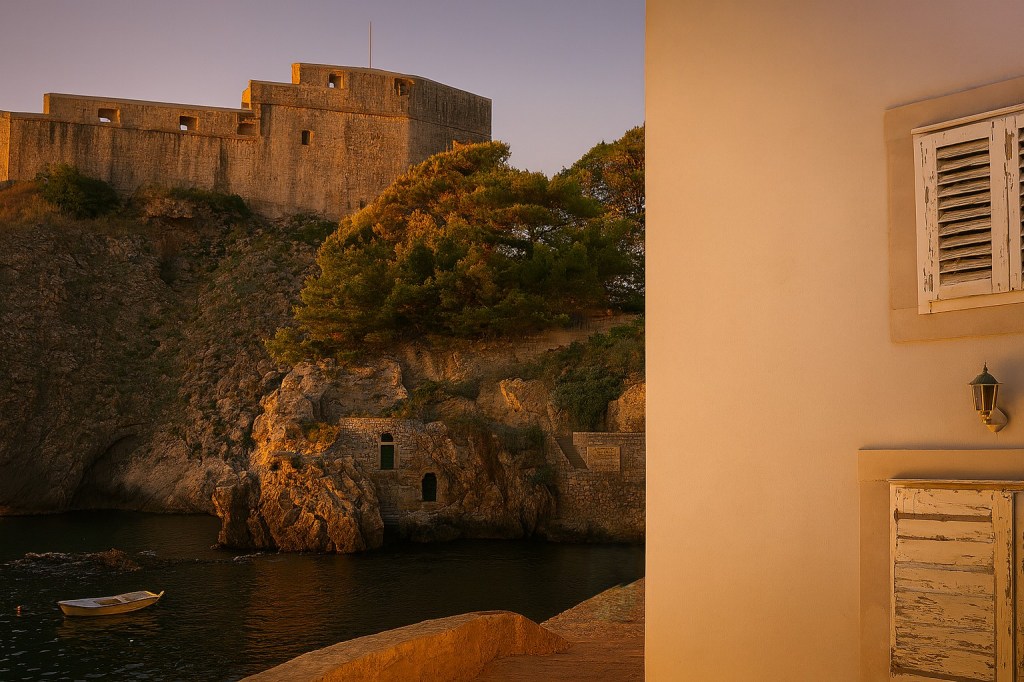
    Dubrovnik, Croatia

    Dubrovnik’s streets at their quietest.

    By capping ship and passenger numbers, Dubrovnik protects the magic of its Old Town. Visitors can wander the marble streets, admire the ancient walls, and enjoy Adriatic views. There’s more breathing room and a stronger sense of authenticity.

    • Accessibility First: While the side streets have stairs, the main thoroughfare (the Stradun) is perfectly flat and paved with limestone. Thus, the Old Port is easy to navigate.
    • Cultural Density: The entire Old Town is a UNESCO site. Visit a 14th-century pharmacy, the Rector’s Palace, and the Cathedral, all within a 10-minute walk.
    • Slow Travel Highlights:

    The Island of Lokrum: A 15-minute ferry takes you to a car-free botanical paradise. It proves to be the perfect reset from the city walls.

    The Franciscan Monastery: Visit the quiet cloisters and buy traditional rosewater cream made according to ancient recipes.

    • Why it rewards slow travel: Visit in the evening or during the off-season. This lets you enjoy the medieval streets at a slower, more peaceful pace.

    Venice (via Ravenna or Trieste)

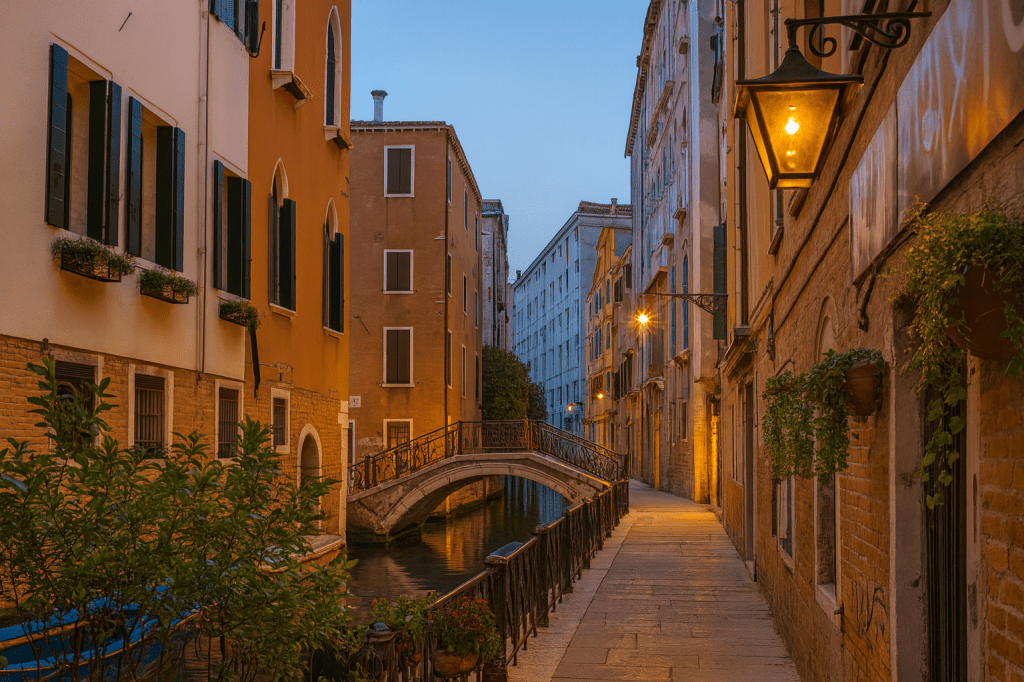
    Venice at dawn.

    With large ships no longer entering the lagoon, Venice has reclaimed much of its serenity. Travelers can explore quieter canals and discover artisan workshops. Enjoy the city at a more thoughtful, unhurried pace. This is precisely how Venice was meant to be experienced.

    • Accessibility First: Focus on the “No-Bridge” routes or use the Vaporetto (water bus) system. It acts as a floating sidewalk to all major sites.
    • Cultural Density: Venice is the world’s highest concentration of art and history. Every corner turned reveals a church or palace of significance.
    • Slow Travel Highlights:

    San Giorgio Maggiore: Take a boat across from St. Mark’s; it’s quieter and has an elevator to the bell tower for the best views in the city.

    Cicchetti in Cannaregio: Eat like a local by sampling small plates at a canal-side wine bar in the Jewish Ghetto.

    • Why it rewards slow travel: With large cruise ships gone, Venice is easier to explore in a relaxed and respectful way, just as it was meant to be enjoyed

    Santorini & Mykonos

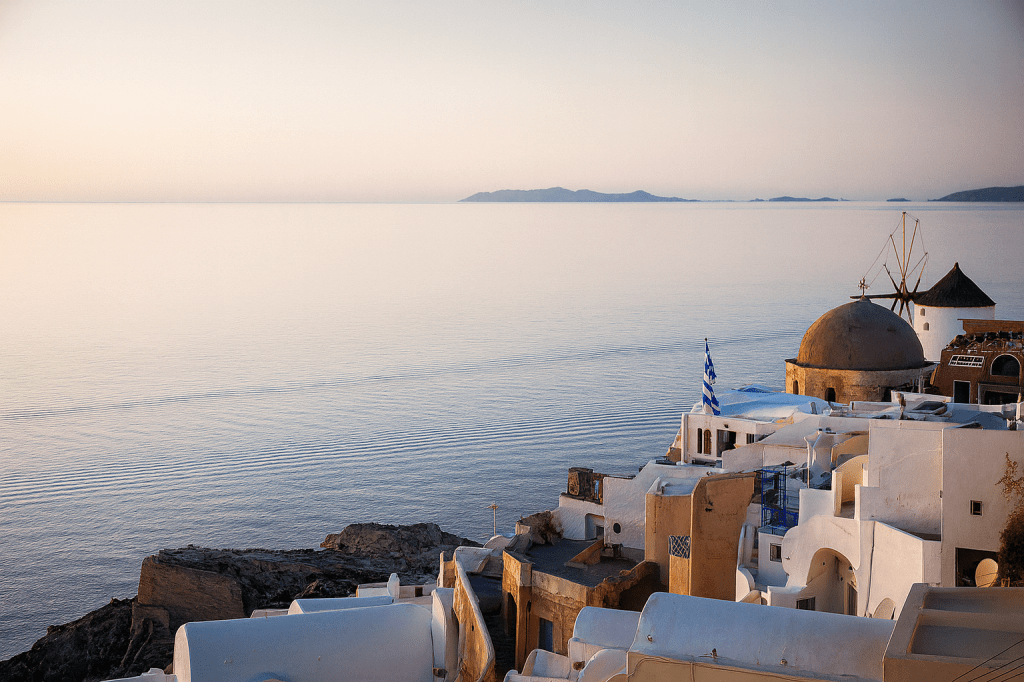
    When the island exhales, Santorini feels timeless.

    Eco taxes and daily visitor limits help preserve the islands’ fragile beauty. Off‑season visits feel more genuine. With softer light, open tables at local tavernas, and a chance to see the islands as locals do.

    • Accessibility First: In Santorini, taking the cable car avoids the steep donkey paths. In Mykonos town, the center is mainly flat and pedestrian-only.
    • Cultural Density: Beyond the views, Santorini offers the prehistoric ruins of Akrotiri. The ruins are entirely indoors and accessible via flat walkways.
    • Slow Travel Highlights:

    Wine Tasting in Pyrgos: Escape the Oia crowds for a quiet afternoon. Enjoy sipping Assyrtiko wine in the island’s highest, quietest village.

    Little Venice Coffee: In Mykonos, find a seat by the water and watch the waves. It’s the most relaxing theater in the world.

    • Why they reward slow travel: Enjoy the caldera paths and linger in the tavernas without lines or crowds.

    Málaga, Spain

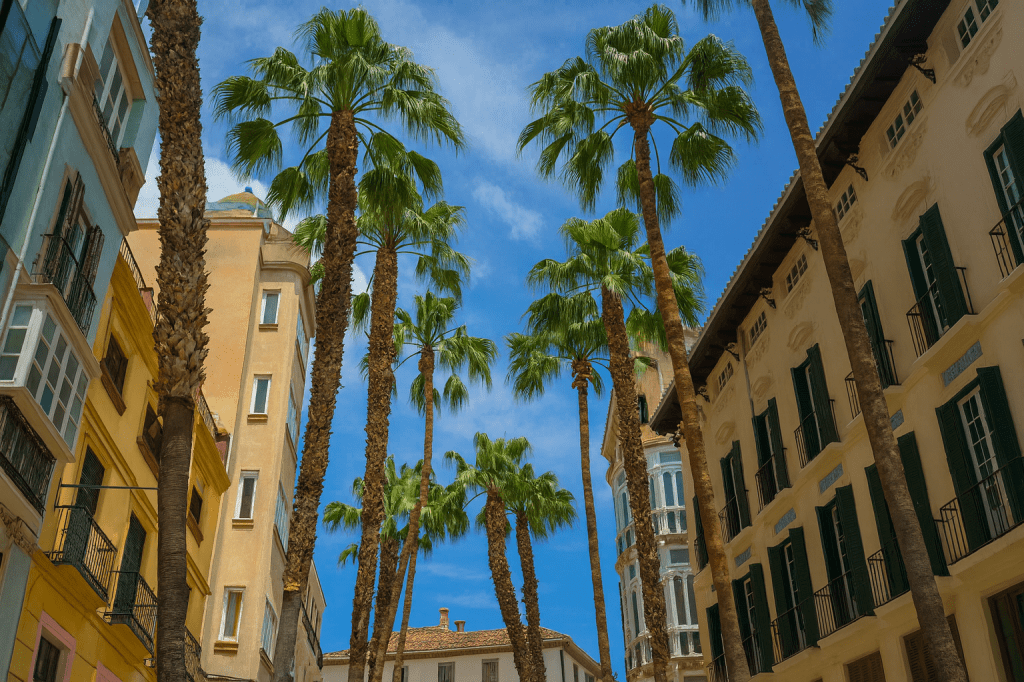
    Explore and find your favorite tapas bar.

    Once overlooked, Málaga has blossomed into a vibrant cultural hub. World‑class museums, a revitalized port, and a lively food scene make it an exciting coastal city. You´ll discover the easygoing warmth of Andalusia.

    • Accessibility First: The city center is largely pedestrianized and paved with smooth marble. It’s one of the most senior‑friendly ports in Europe.
    • Cultural Density: You can experience world-class art (Picasso Museum, Pompidou Centre) within a few blocks of each other.
    • Slow Travel Highlights:

    Atarazanas Market: Spend a morning sampling Aloreña olives and almonds; it’s a sensory experience without the “tourist trap” feel.
    Paseo del Parque: A botanical garden that doubles as a city promenade, offering plenty of benches and shade.

    • Why it rewards slow travel: It’s a city designed for paseo (strolling). Long lunches, not excursion schedules, set the rhythm.

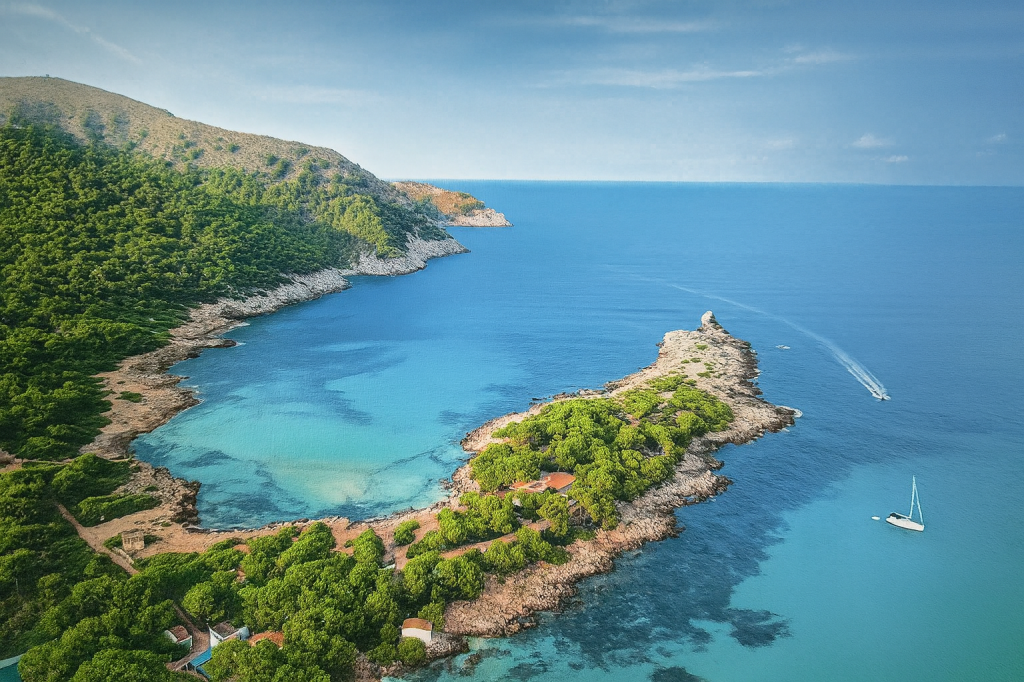
    Cagliari, Sardinia

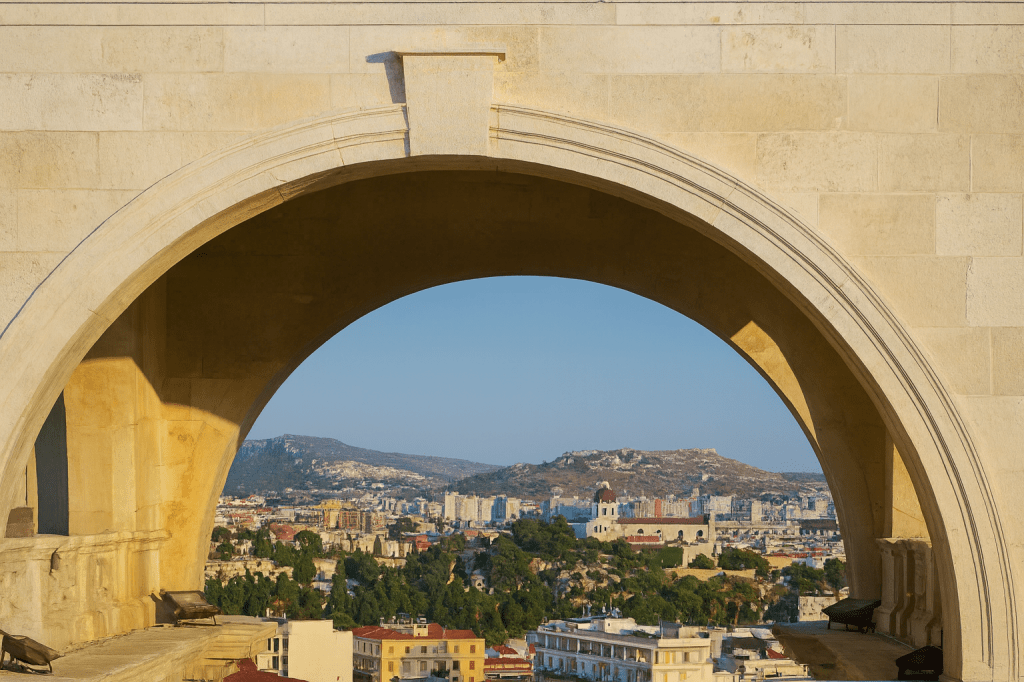
    Take the elevator for sweeping views of the city.

    Set on a famed “Blue Zone” island known for longevity, Cagliari offers a deeply authentic Italian experience. Expect sun‑drenched hilltop views, ancient ruins, and a relaxed pace of life that reflects the island’s long‑lived spirit.

    • Accessibility First: The hilltop Castello district is steep. Public elevators now whisk you to the top for panoramic views.
    • Nature at the Doorstep: The Molentargius‑Saline Regional Park is home to wild flamingos. It’s an easy taxi ride away.
    • Slow Travel Highlights:

    Marina District Lunch: Sit for a two-hour meal of fregola (Sardinian pasta) and local Vermentino wine.

    Poetto Beach: A 5-mile stretch of flat, accessible boardwalk perfect for a sea-breeze walk and a gelato.

    • Why it rewards slow travel: The Molentargius‑Saline Regional Park is home to wild flamingos. It’s an easy, flat taxi ride away.
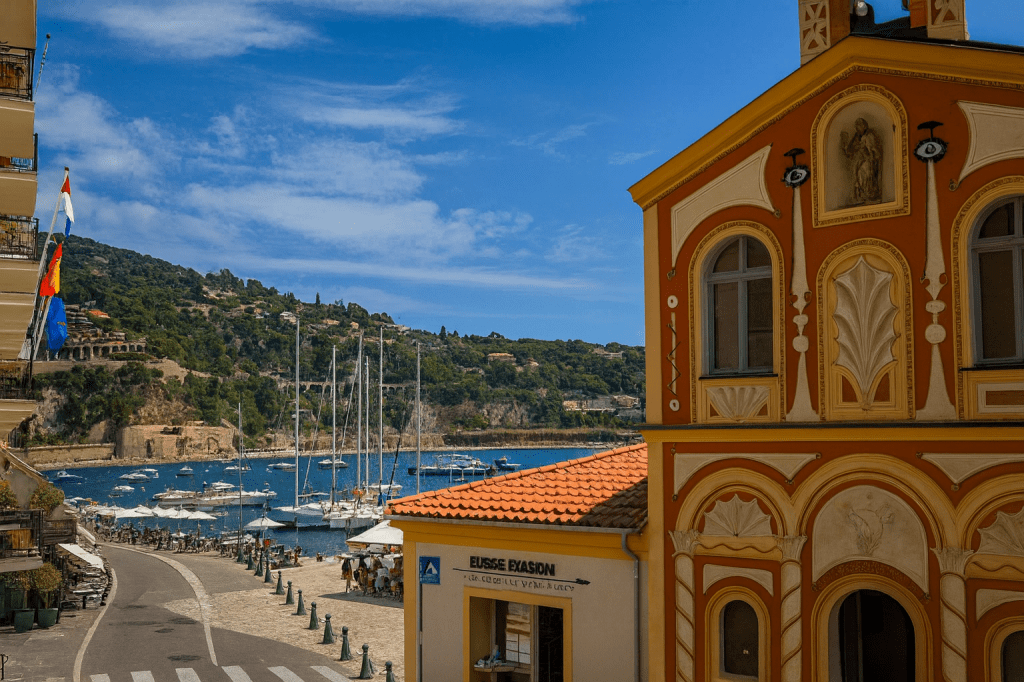
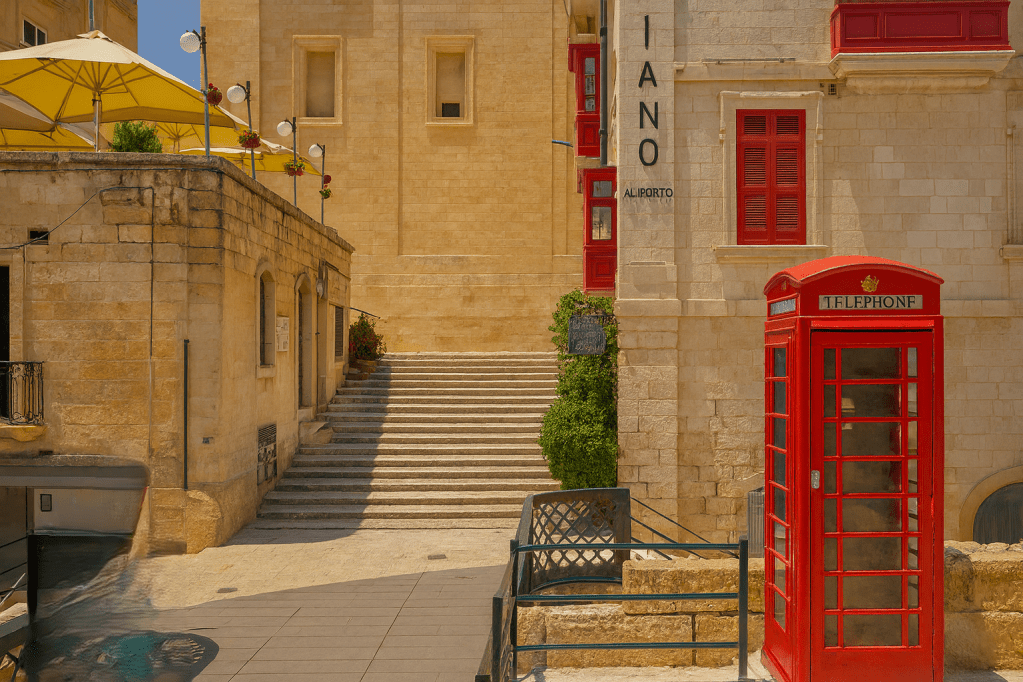
    Valletta, Malta

    A city designed to be absorbed slowly.
    Valletta packs centuries of history into a compact, walkable peninsula. As a UNESCO World Heritage city, it offers grand architecture, sweeping harbor views, and a rich blend of Mediterranean cultures. This is a city you can explore in a single, delightful day.

    • Accessibility First: The Barrakka Lift is a modern glass elevator. It carries cruise passengers from the dock straight into the Upper Barrakka Gardens, skipping the steep hills.
    • The Three Cities Ferry: Take a traditional wooden boat (dgħajsa) across the harbor for a quiet, residential look at Maltese life.
    • Slow Travel Highlights:

    St. John’s Co-Cathedral: Go mid-afternoon to admire Caravaggio’s masterpieces in silence once the morning groups depart.

    Casa Rocca Piccola: A lived‑in 16th‑century palace. You can tour its aristocratic history at a human pace.

    • Why it rewards slow travel: Valletta feels like an open-air museum. It presents plenty of places to sit and interesting stories around every corner.

    Kotor, Montenegro

    In Kotor, simply sitting is an experience.

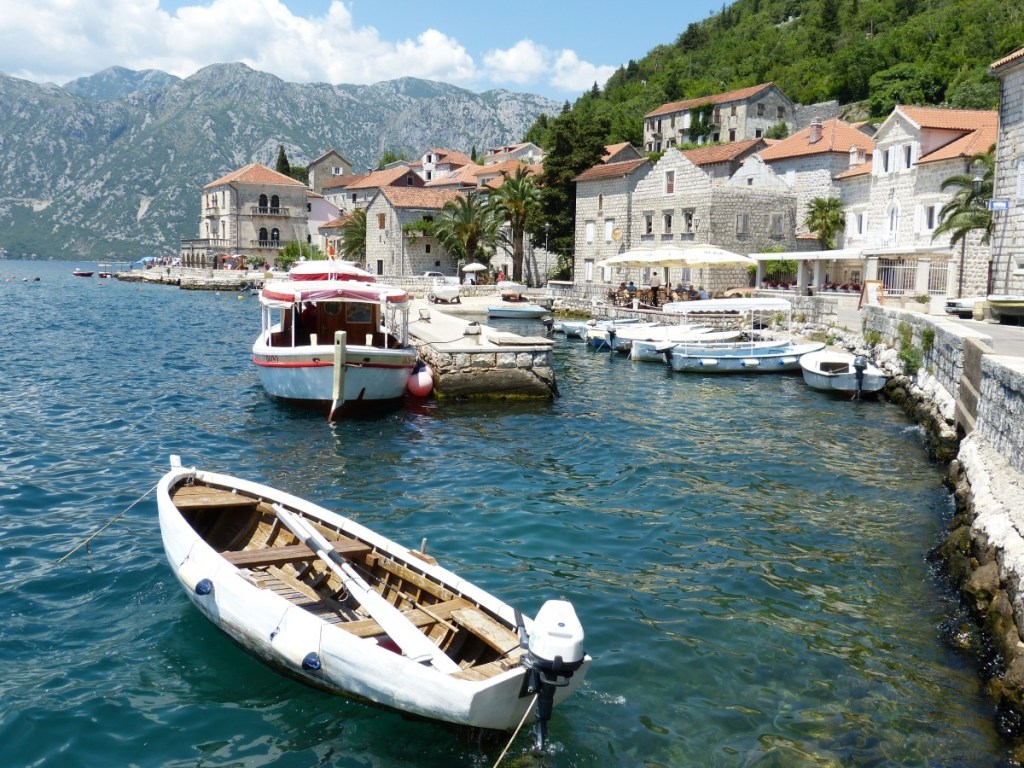
    Kotor’s charm lies in its slow, scenic rhythm. The flat waterfront invites easy strolls along the fjord‑like bay, while the nearby village of Perast offers postcard‑perfect tranquility. It’s a destination that rewards travelers who savor the journey.

    • Accessibility First: You don’t need to climb the 1,300 steps to the fortress. The beauty of Kotor is best seen from the flat, paved path that hugs the bay.
    •  Maritime History: The Maritime Museum is housed in a fabulous, quiet palace—a perfect refuge for a slow hour of exploration.
    • Slow Travel Highlights:

    Boat to Perast: Skip the bus and take a small boat to the “Lady of the Rocks” island. Then enjoy some coffee in the tiny town of Perast.

    The Cat Square: Find a seat in a square with a book and a feline companion—the definition of Montenegrin “slow.”

    • Why it rewards slow travel: The fjord‑like scenery is so dramatic. Simply sitting at a pier‑side café becomes a full‑day activity.

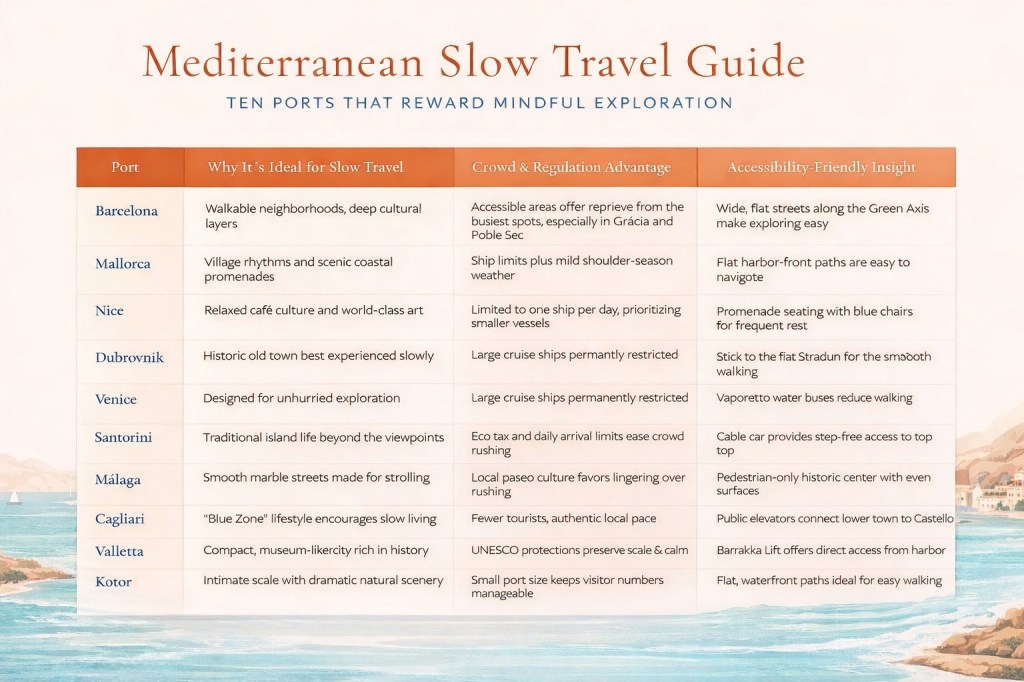
    Quick Comparison Table

    The table below highlights ten representative ports that best illustrate how slow travel principles work in practice. Extra ports covered in the article offer similar benefits, but with different cultural or geographic nuances.

     A quick reference for 10 Mediterranean cruise ports that reward slower, more mindful exploration.

    You can check how many ships will be in port on any given day. Use tools like Cruise Timetables, which helps you decide whether a port will feel calm or congested.

    Why These Ports Shine for Slow Travelers

    Across the Mediterranean, new cruise rules, daily visitor limits, and eco-taxes make these ports ideal for travelers over 50. These places encourage you to explore, enjoy, and connect—the essence of slow travel.

    When you’re deciding whether to go ashore or stay onboard, start with one simple question. Does this port offer something unique? Is it accessible and genuinely aligned with what I enjoy?


    Then picture the day itself. Can you see a relaxed rhythm that adds to your well‑being? Those small gut checks make it easier to choose days that actually support the cruise you want.


    If you’re planning a Mediterranean sailing, this guide can help you. It will assist in choosing ports, seasons, or shore days that match your pace.

    Slow travel is ultimately about intention, and that includes knowing when a port day doesn’t align with your preferred pace.

    Some Mediterranean ports reward lingering walks, café pauses, and compact exploration. Others involve long transfers, tender queues, or demanding terrain that can turn a “day ashore” into a test of endurance. Recognizing the difference is what separates a relaxing cruise from an exhausting one.

    Some journeys end not with landmarks, but with rest.

    In the next article, we’ll look at Mediterranean ports where staying on the ship is often the smartest choice. Sometimes choosing rest, space, and onboard comfort becomes the most rewarding decision of the entire journey.

    Some links on this site are affiliate links. This means I earn a small commission at no extra cost to you. I only recommend experiences I truly value.

  • Discover the Hidden Joys of Mediterranean Cruises

    Discover the Hidden Joys of Mediterranean Cruises

    A Travel Professional’s Gentle Guide to What Experience Really Teaches You

    Standing on a cruise ship deck for the first time, you watch the Mediterranean sun sink and color the sea. In that moment, a deep sense of calm settles in.

    A first European cruise has a way of transforming you.  It’s not just about the sea, the pastries, or waking up somewhere new each day. The real change comes from the small, unplanned moments. They teach you patience, presence, and a softer way of moving through the world. These are the lessons that stay with you long after your luggage is back in the closet.

    After more than 30 European sailings, each trip continues to shape how I travel. I enjoy to guide those just starting. I focus on comfort and a pace that lets you enjoy each experience. Whether you prefer quiet time or friendly conversation, planning for both creates a more balanced, meaningful trip.

    The Experience of Cruising Europe After 50

    Early on, I approached cruises with a checklist mentality, focusing only on must-dos. My first trip was stimulating but a whirlwind of go-go-go, which eventually became a blur.  

    Over time, I learned that the moments you remember most aren’t the ones highlighted on the itinerary. They’re the quiet ones:

    • Savoring a cappuccino in a tucked-away Venetian alley
    • Witnessing a Santorini sunset
    • Standing before a great master at the Renoir Museum in Cagnes-sur-Mer
    • Watching the fiery glow of Stromboli at night

    If mobility is a concern, choose accessible tours or opt for slow, restful days on the ship. These can be just as rewarding. These choices can make your trip more comfortable and adventurous.

    Try the “One Neighborhood Challenge”

    At each port, choose just one place to explore. The fun begins before your cruise as you research and plan your stop. Take a short excursion or design your own outing lasting up to four hours. Pick one café to linger in, a site to visit at your pace, or one museum to explore. That single experience will likely stay with you longer than racing through several attractions.

    Port Days Are Not a Contest

    Cities like Rome, Barcelona, and Dubrovnik are overflowing with life and history. You explore all day and still want more. But there’s something special about letting yourself be spontaneous. My favorite memories happened when I had no set plans. Instead of joining a crowded tour at the Colosseum, I once wandered through the Monti district. Sitting in Piazza Madonna dei Monti with a gelato, I’d watch people go by. I found a version of Rome that felt even more real.

    The Ship Becomes Part of the Story

    At first, the ship feels like a floating hotel. Slowly, it becomes home. Returning to the same cabin each night lets me settle into the rhythm of meals and quiet hours. It becomes its own gentle continuity. These are the anchors that make each day feel intentional.  

    How Weather, Comfort, and Practical Wisdom Interact

    European weather can sometimes be erratic. By packing light layers, you can adapt to whatever the day brings. Comfortable shoes let you explore easily. Accept the weather instead of resisting it.

    One evening in Dubrovnik, a cool breeze swept across the Adriatic. Most people went inside, but I slipped on a light jacket and stayed out on deck. Being open to the weather is part of the experience.

    You don’t need perfect language skills to feel welcome, either. At a bakery in Florence, I said, “Buongiorno, un caffè, per favore.” The baker smiled and helped me with my pronunciation. That small moment led to a conversation about local pastries. A smile and kind words matter far more than perfect grammar.

    The Best Experiences Aren’t Always Planned

    Some of the best meals and memories happen when you wander down a quiet side street. Guidebooks are helpful, but instincts are even more useful.

    Moments That Stay

    Often, it’s better to enjoy a few experiences deeply than to try to do everything.

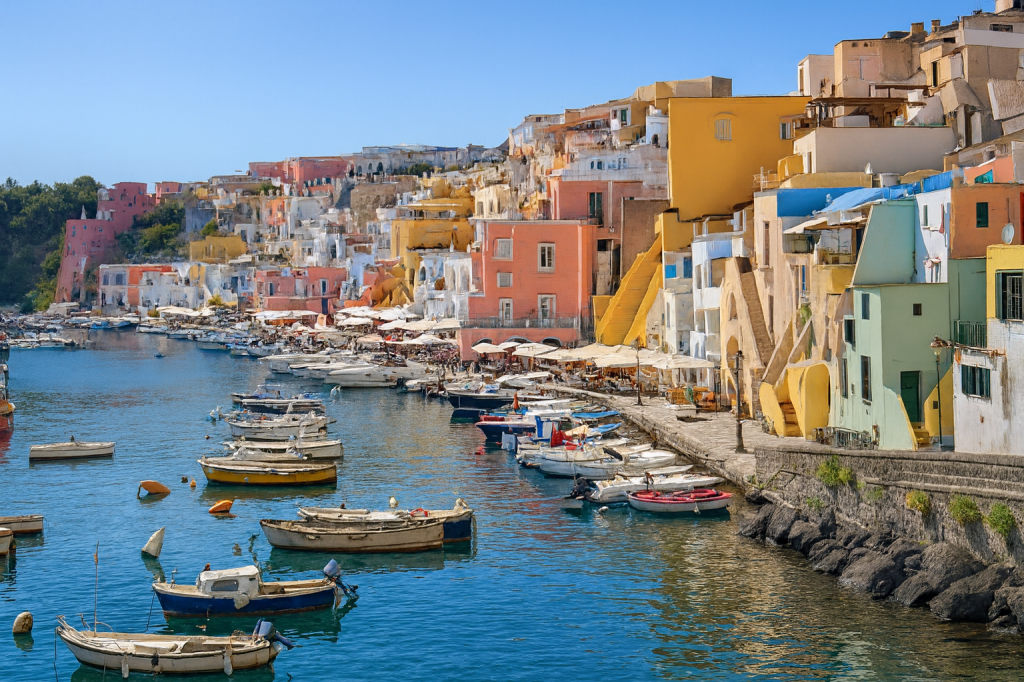
    In Naples, I skipped the rush of trying to squeeze Capri and Pompeii into the same day. Instead, I hired a private driver and spent the afternoon exploring the Royal Palace at Caserta. On another trip, I spent an afternoon learning to make pizza. Another time, I took the hydrofoil to Procida for a long seafood lunch.

    Why This Perspective Matters

    This site is for travelers over 50 who want to cruise Europe with confidence. It’s built for people who value good planning and a clear sense of purpose.

    Here, you’ll find thoughtful reflections, practical tips, and honest recommendations to help you choose what’s truly worth your time.

    A Thoughtful Way Ahead

    A Mediterranean cruise benefits from more planning. The region rewards a slower pace, and you’ll enjoy your trip more if you move with it.

    Make a small list of simple joys you’d like to experience:

    • a sun-warmed morning market.
    • a quiet cobblestone café.
    • a breezy overlook point.
    • an hour on deck with fresh sea air.

    Give yourself time to adjust to new time zones. Don’t rush. There’s no pressure, only possibilities.

    Your Guide to the Sea

    The sea helps you slow down. Let each port teach you something new. When you return home, let the experience deepen your patience, open-mindedness, and appreciation for the gentle wonders around you. Let these small moments stay with you long after the sea is out of sight.

    The best cruise isn’t the one where you did the most.
    It’s the one that changes you in a way only you can feel.
    If you’re planning your own European cruise and want guidance rooted in real experience, you’re in the right place.

    Some links on this site are affiliate links. This means I may earn a small commission at no extra cost to you. I only recommend experiences I truly value.